Taking the Trucks Off the Hill at Bamberton
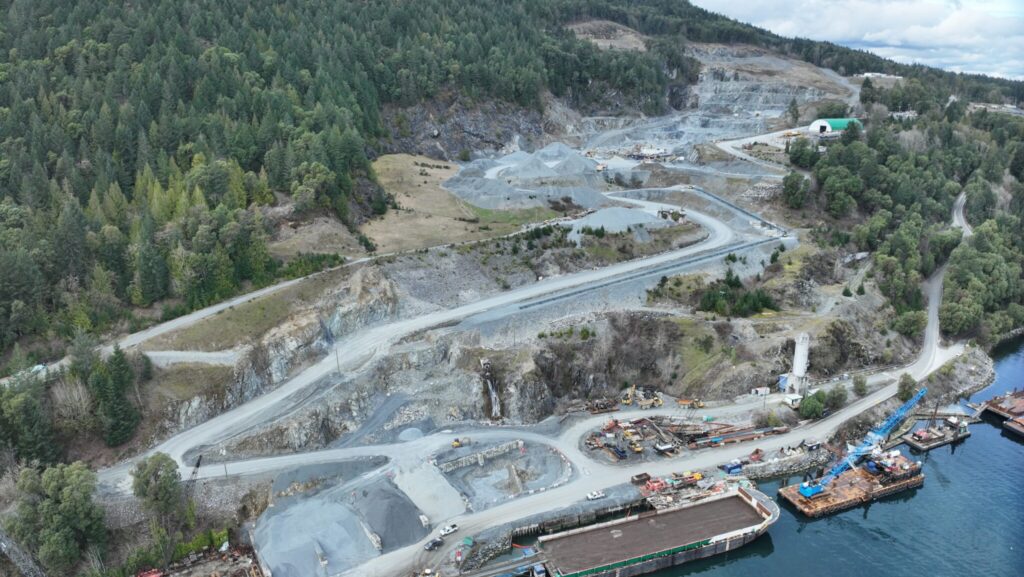
At Granite’s Bamberton Quarry on Vancouver Island, a new conveyor and silo system is being built to replace much of the truck haul between the processing plant and marine loadout, reducing material handling, truck traffic and diesel use.
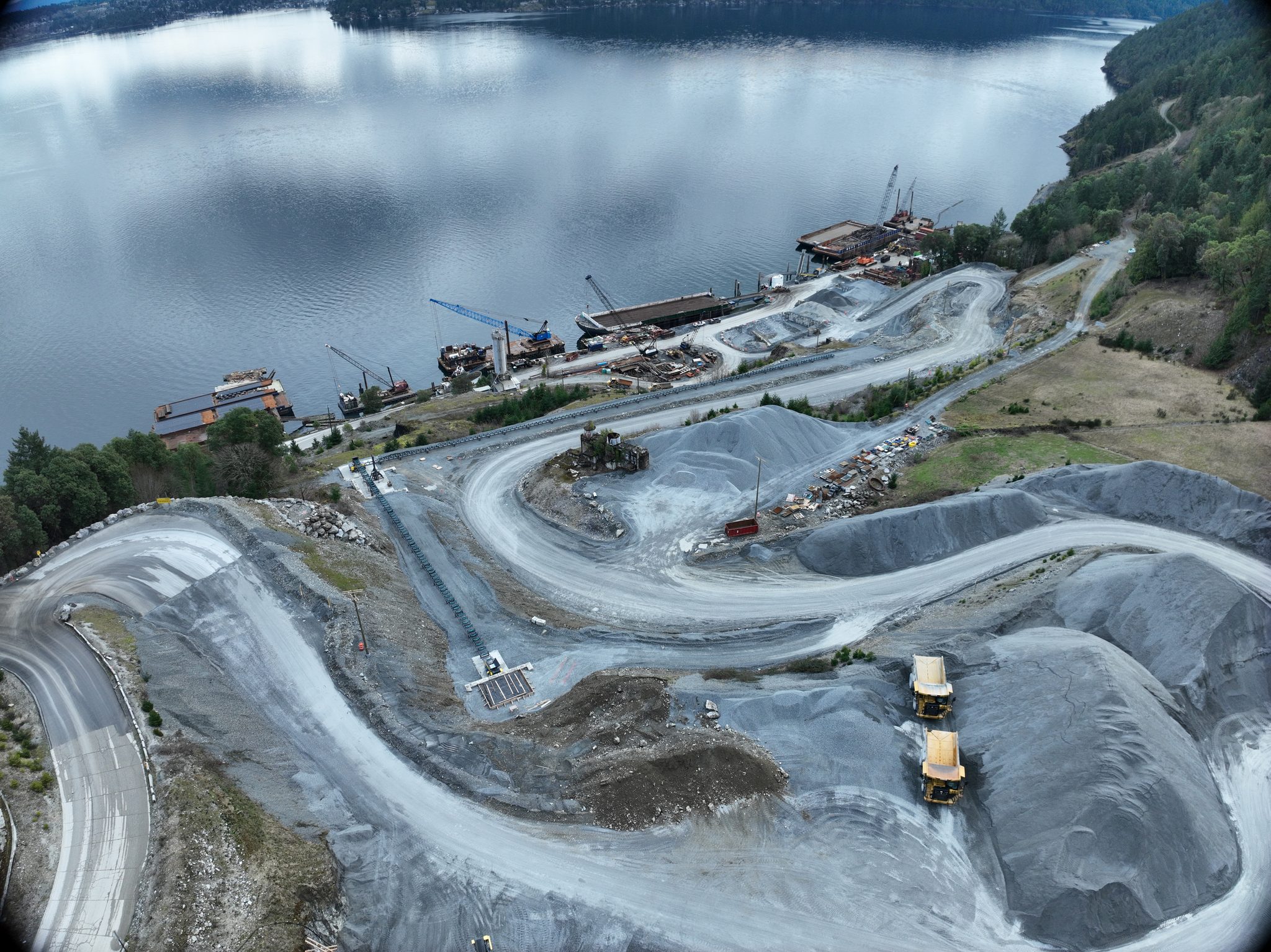
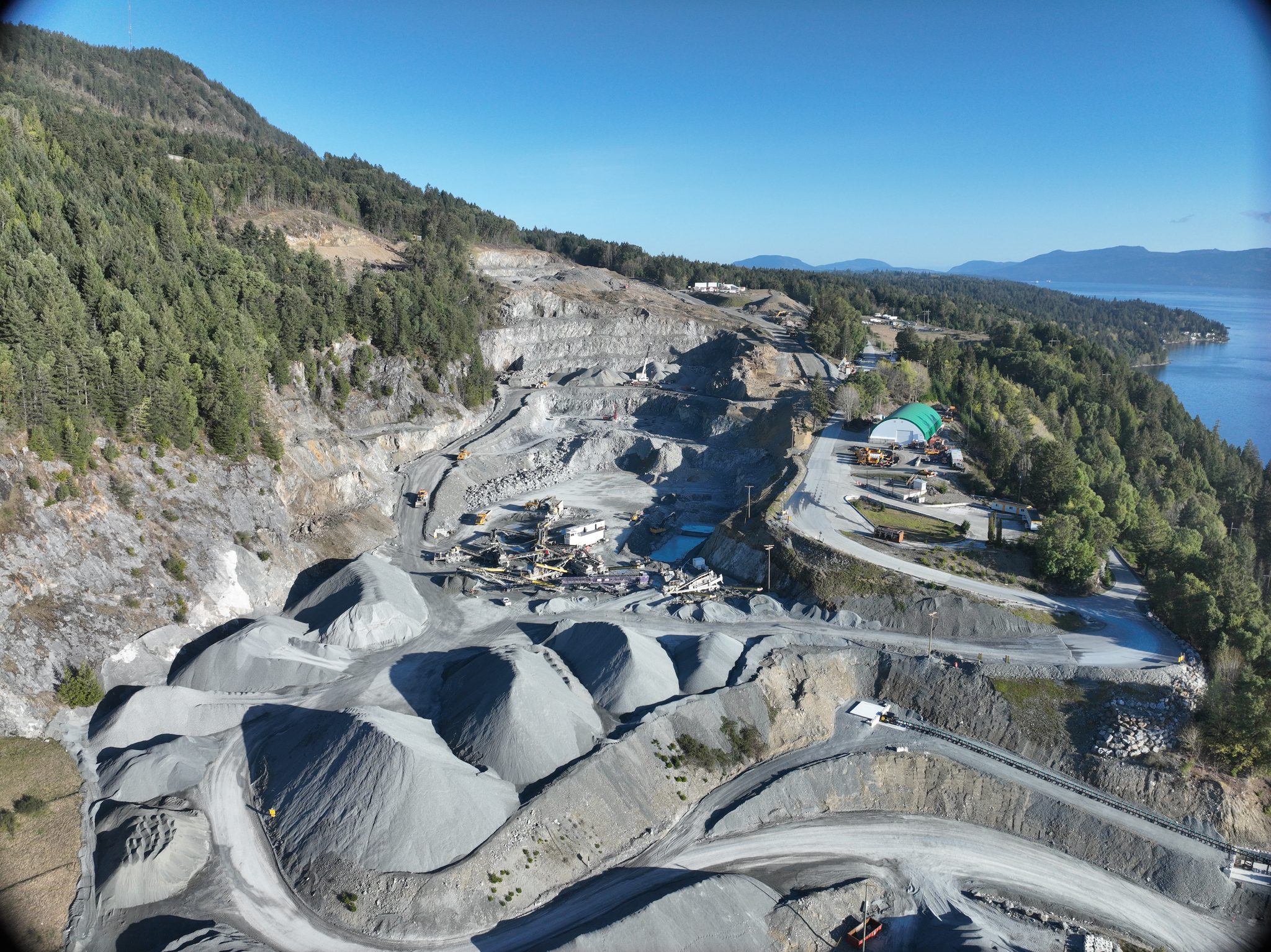
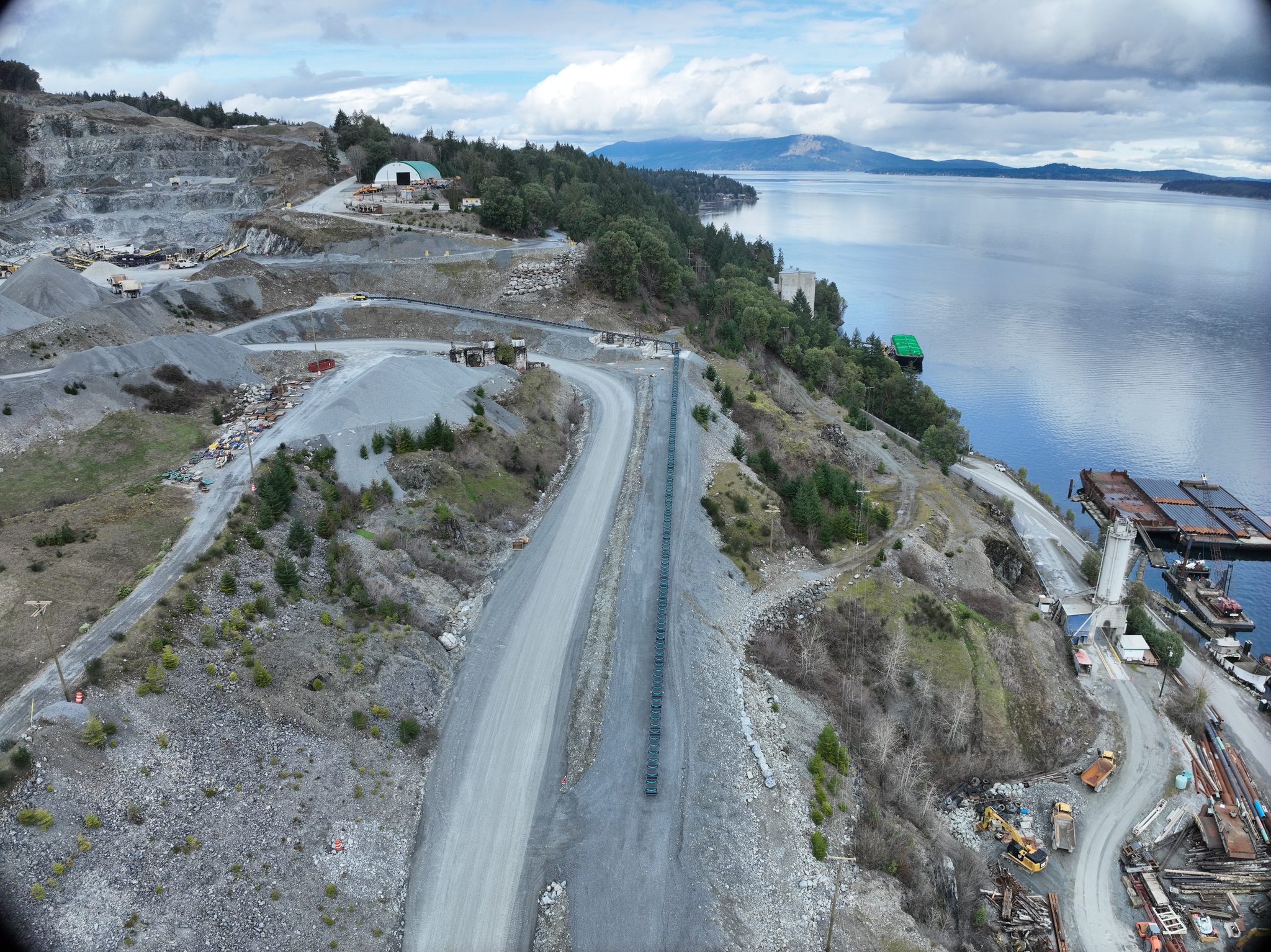
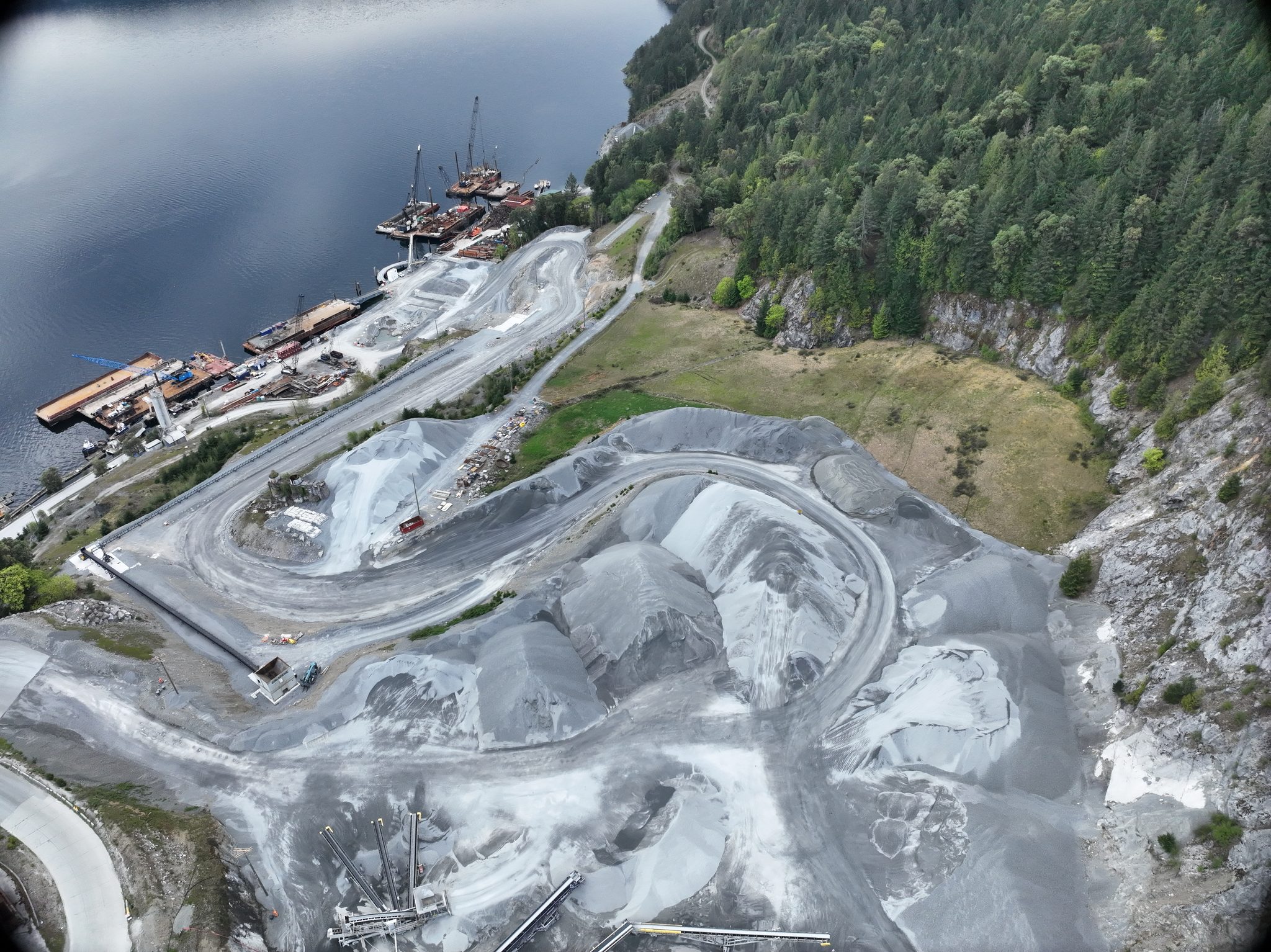
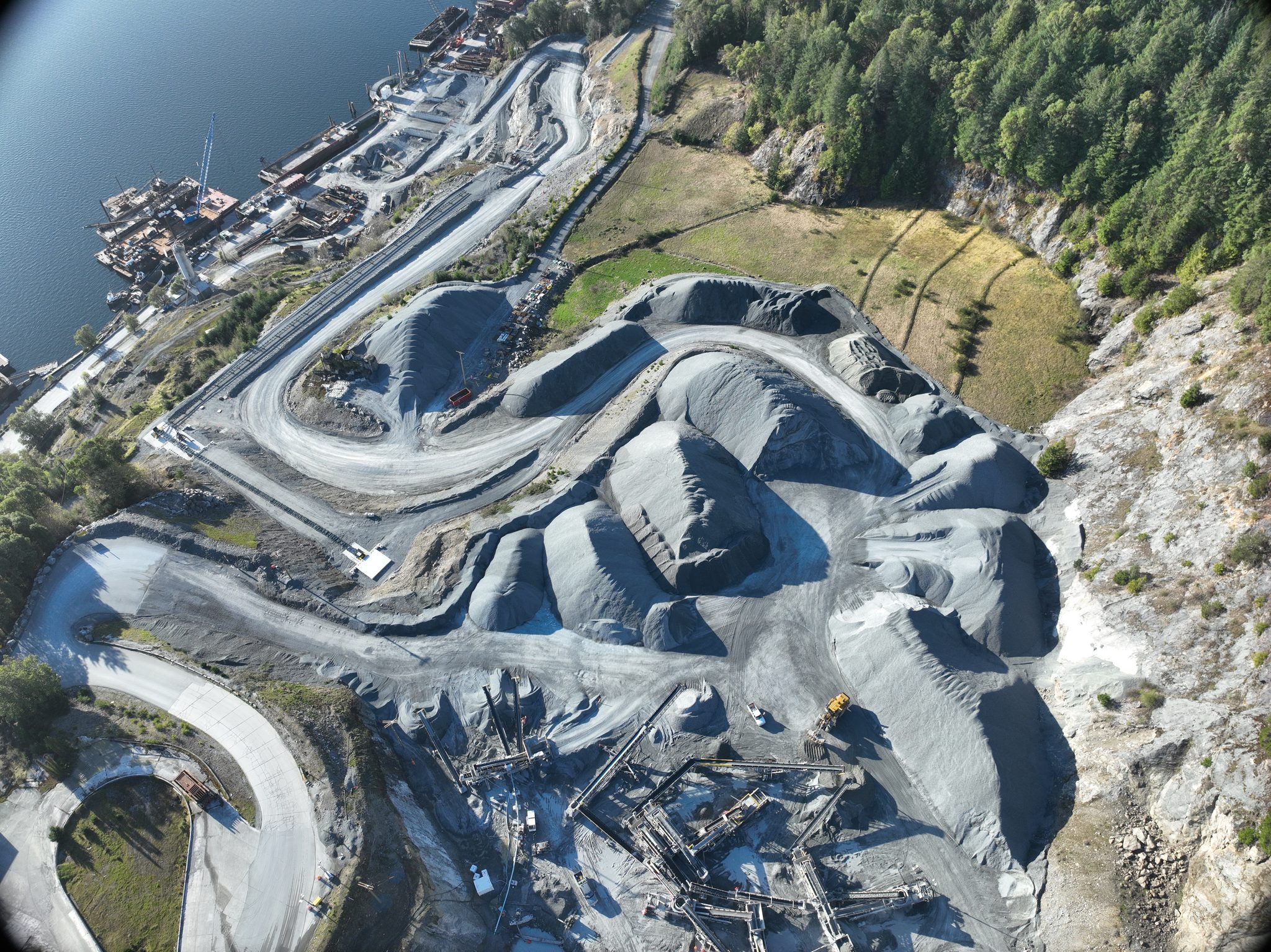
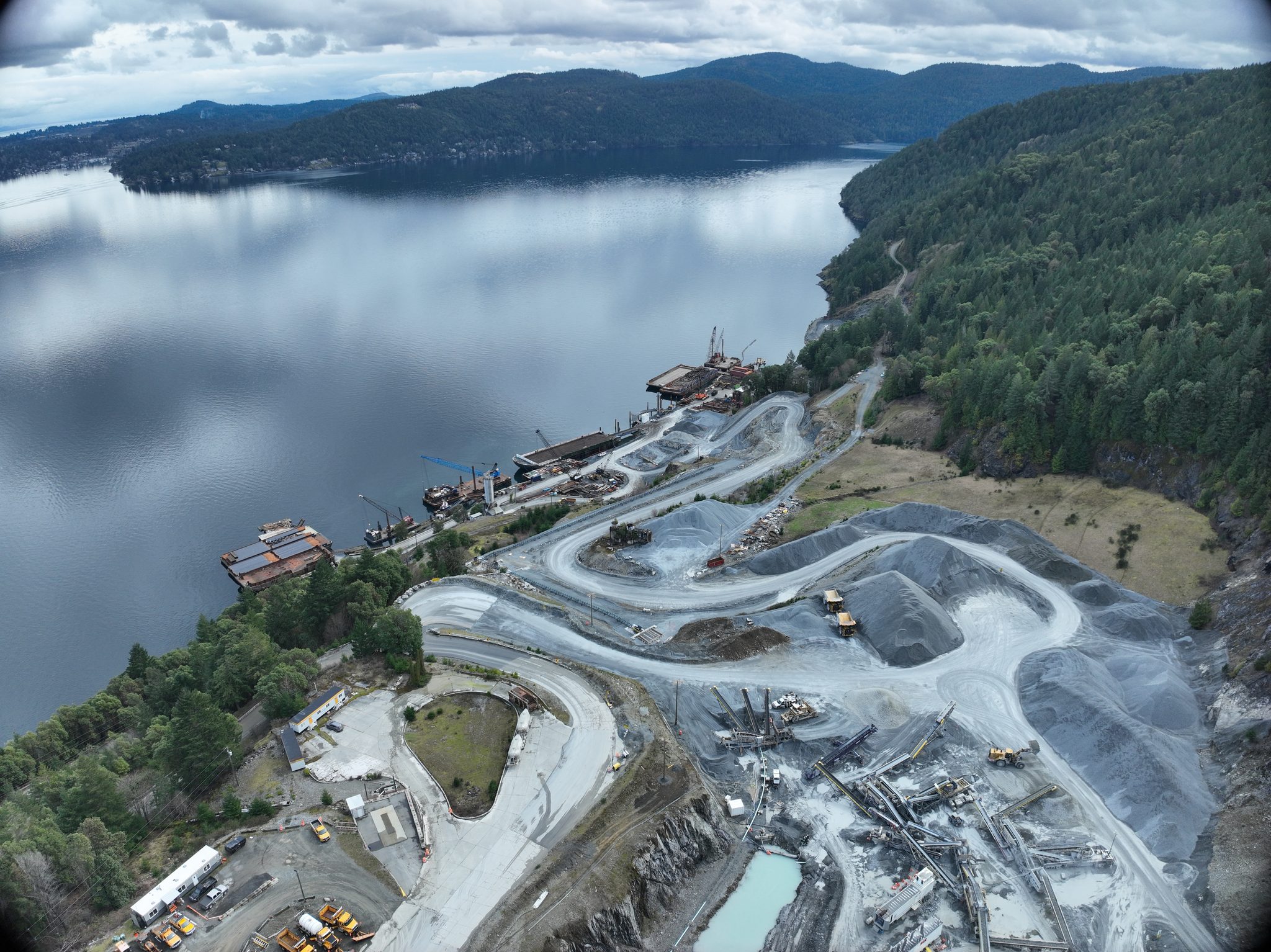
Bamberton Quarry sits on the water near Mill Bay, BC, where its location provides direct access to marine transportation for aggregate moving to customers across Vancouver Island and the Lower Mainland.
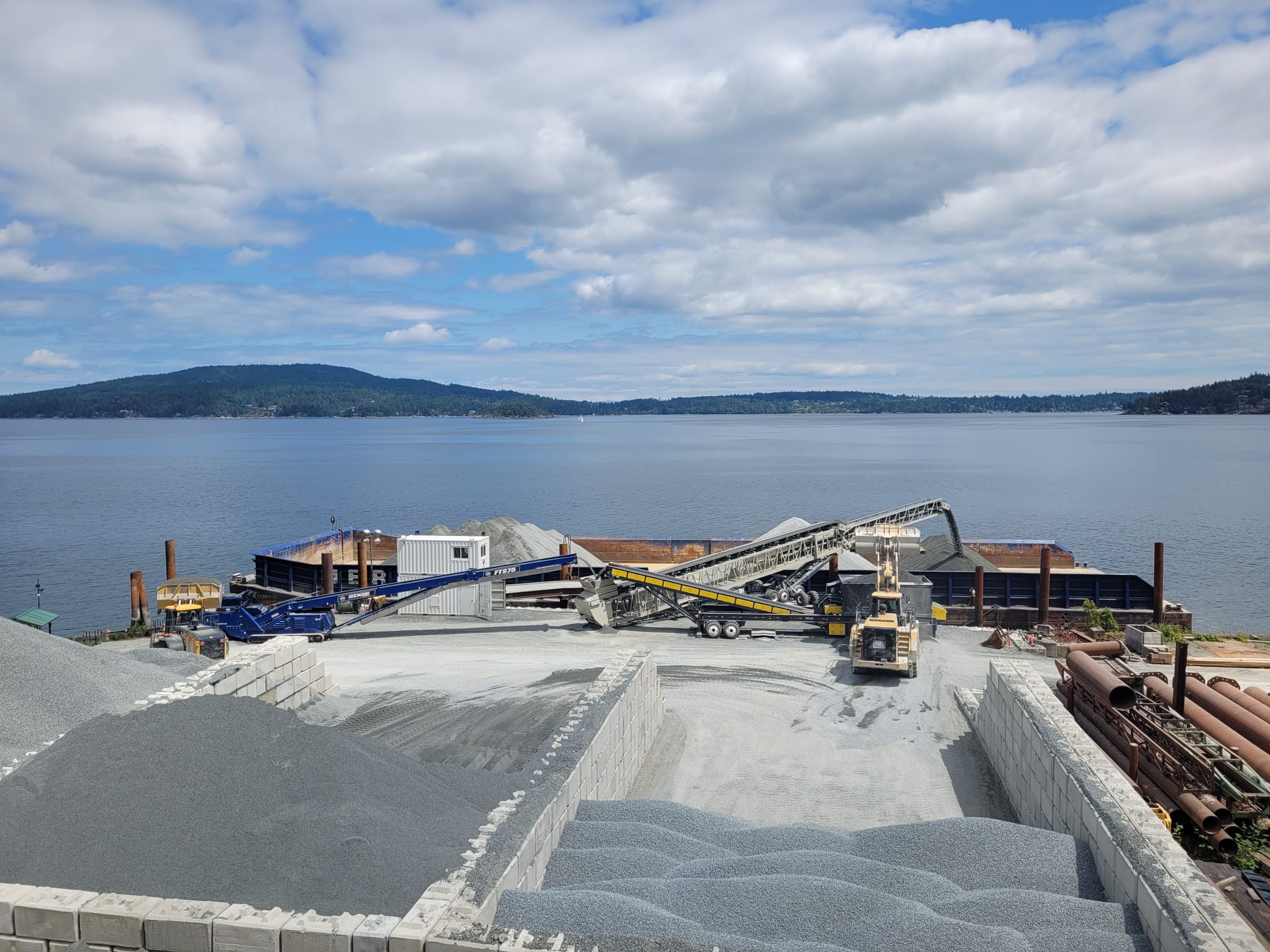
That location also creates a challenge. The processing plant sits well above the waterfront, and finished aggregate has historically relied on a combination of stockpiling, loaders and haul trucks to make the trip from the plant down to the barge loadout.
Granite took over the Bamberton operation in 2023 and soon began looking at how that material flow could be improved.
About Granite Construction
Founded in 1922, Granite Construction is one of North America’s leading infrastructure and construction materials companies, generating approximately $4.4 billion USD in annual revenue and employing nearly 6,000 people.
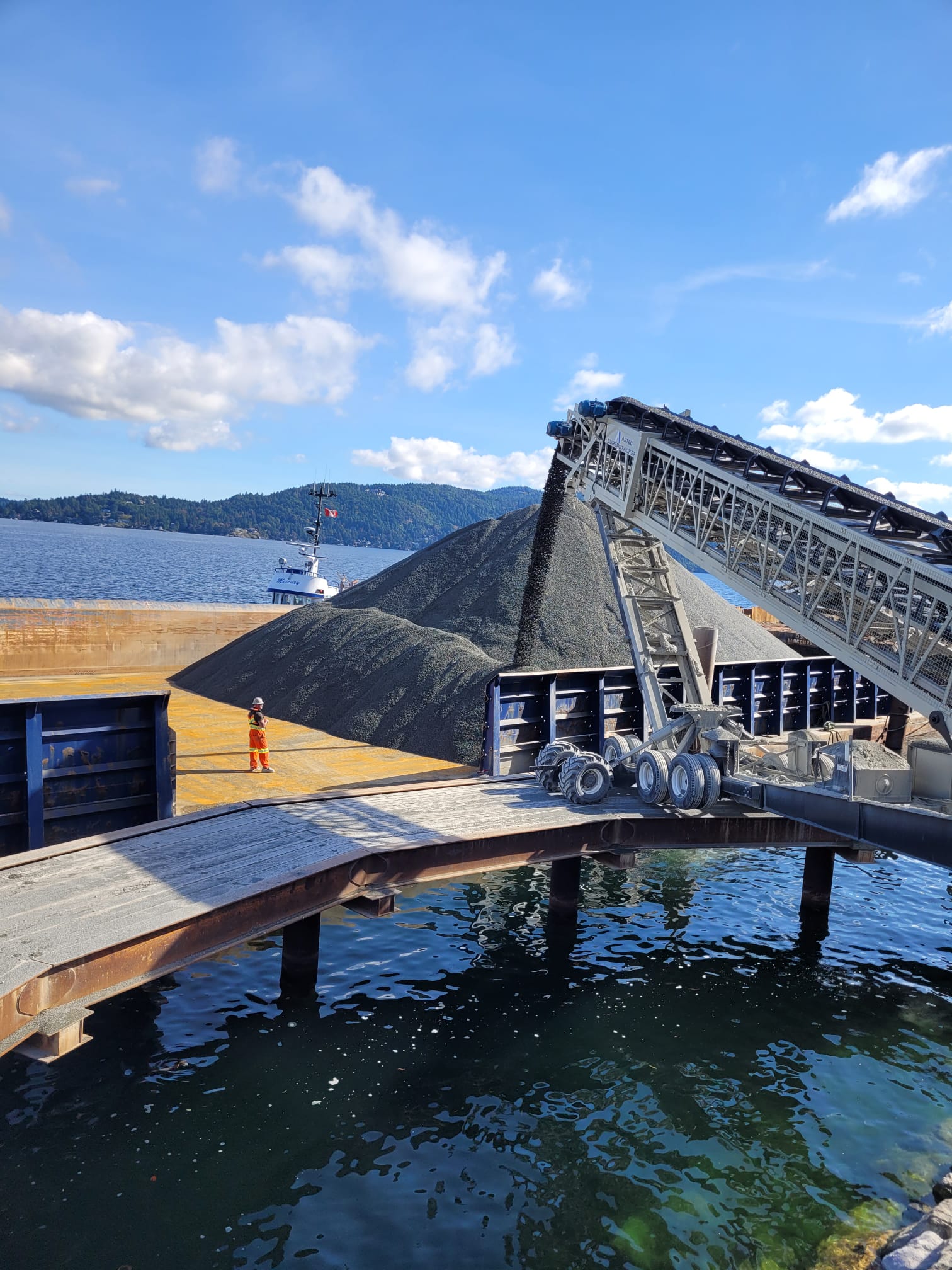
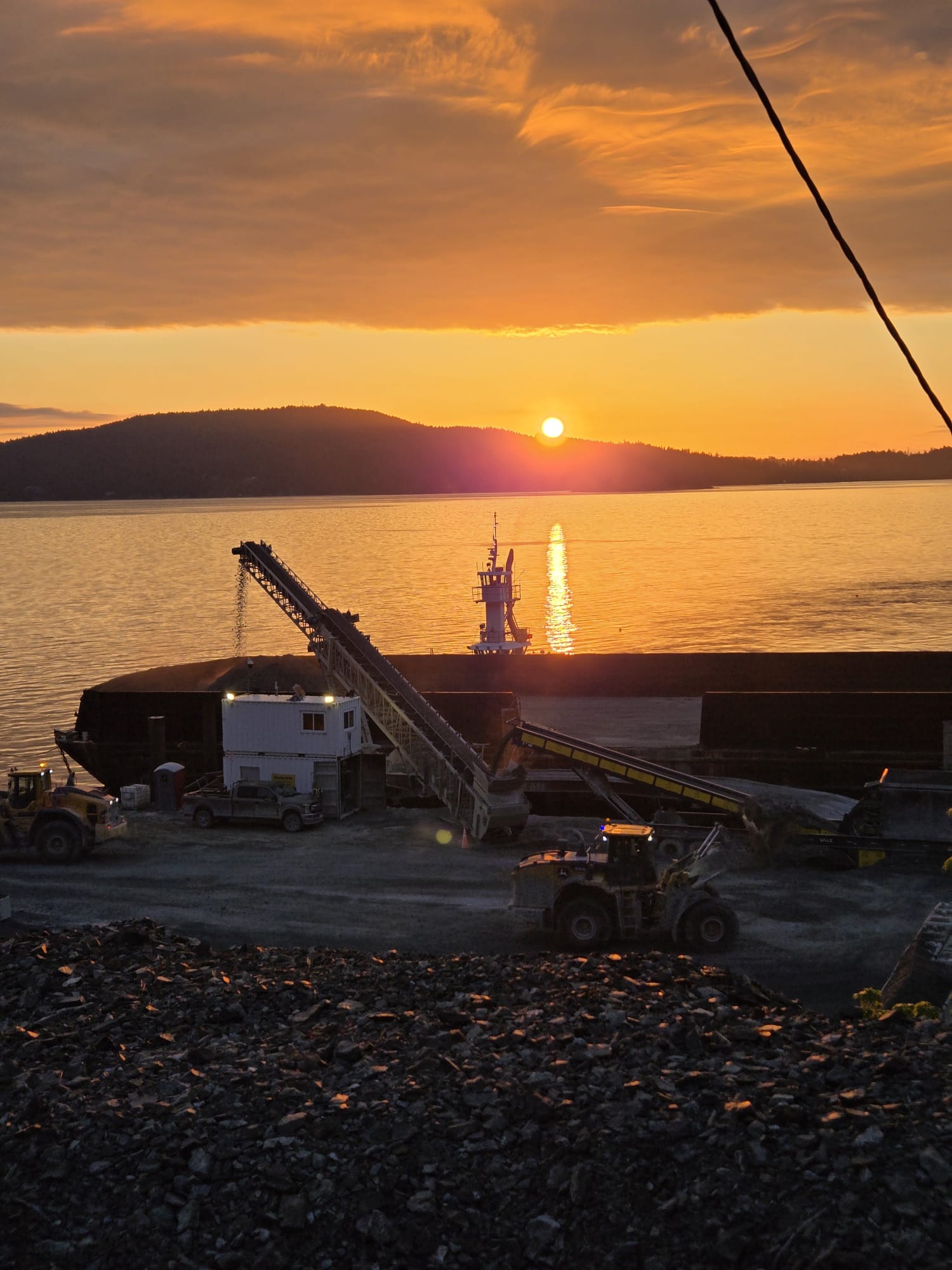
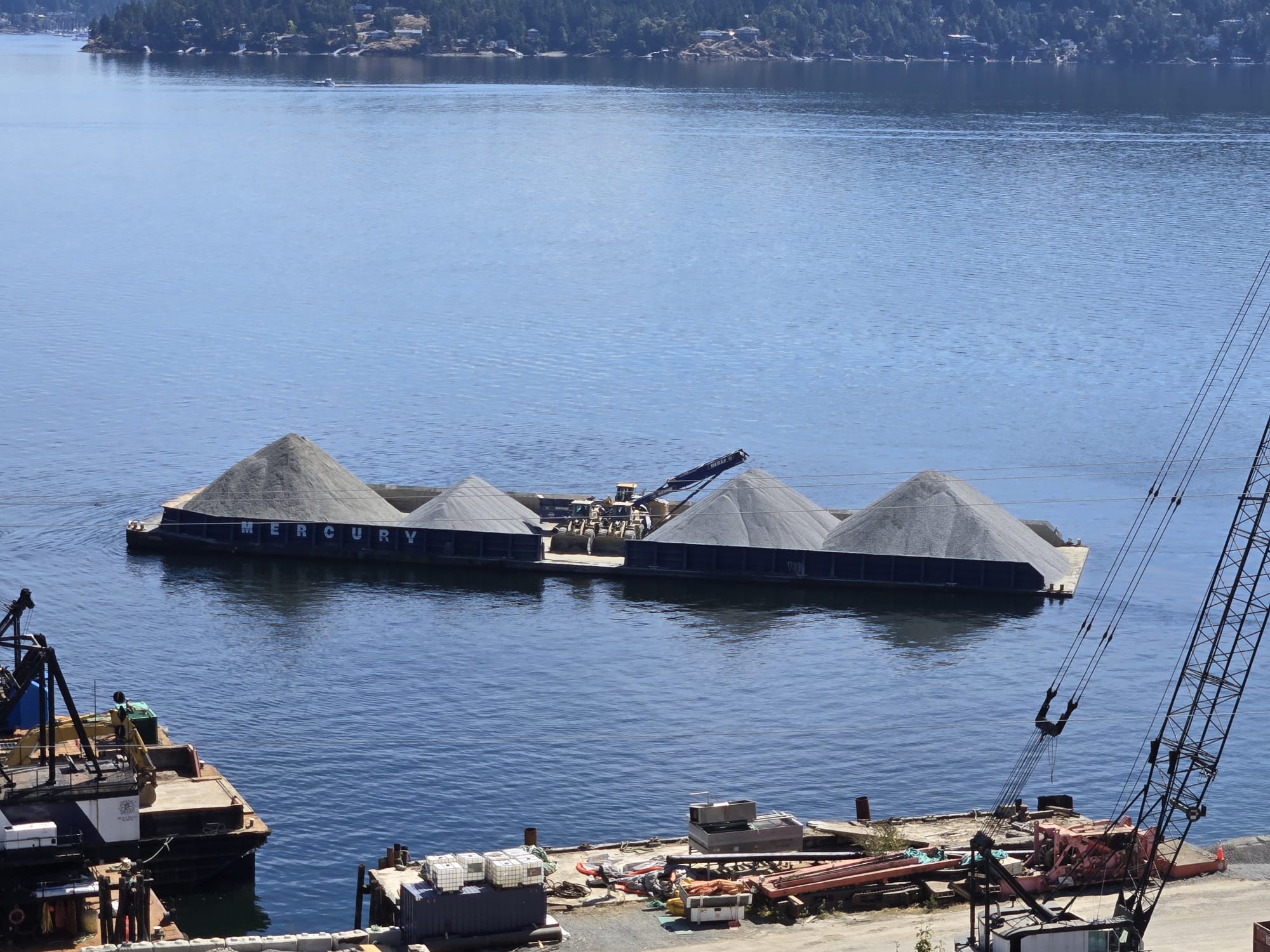
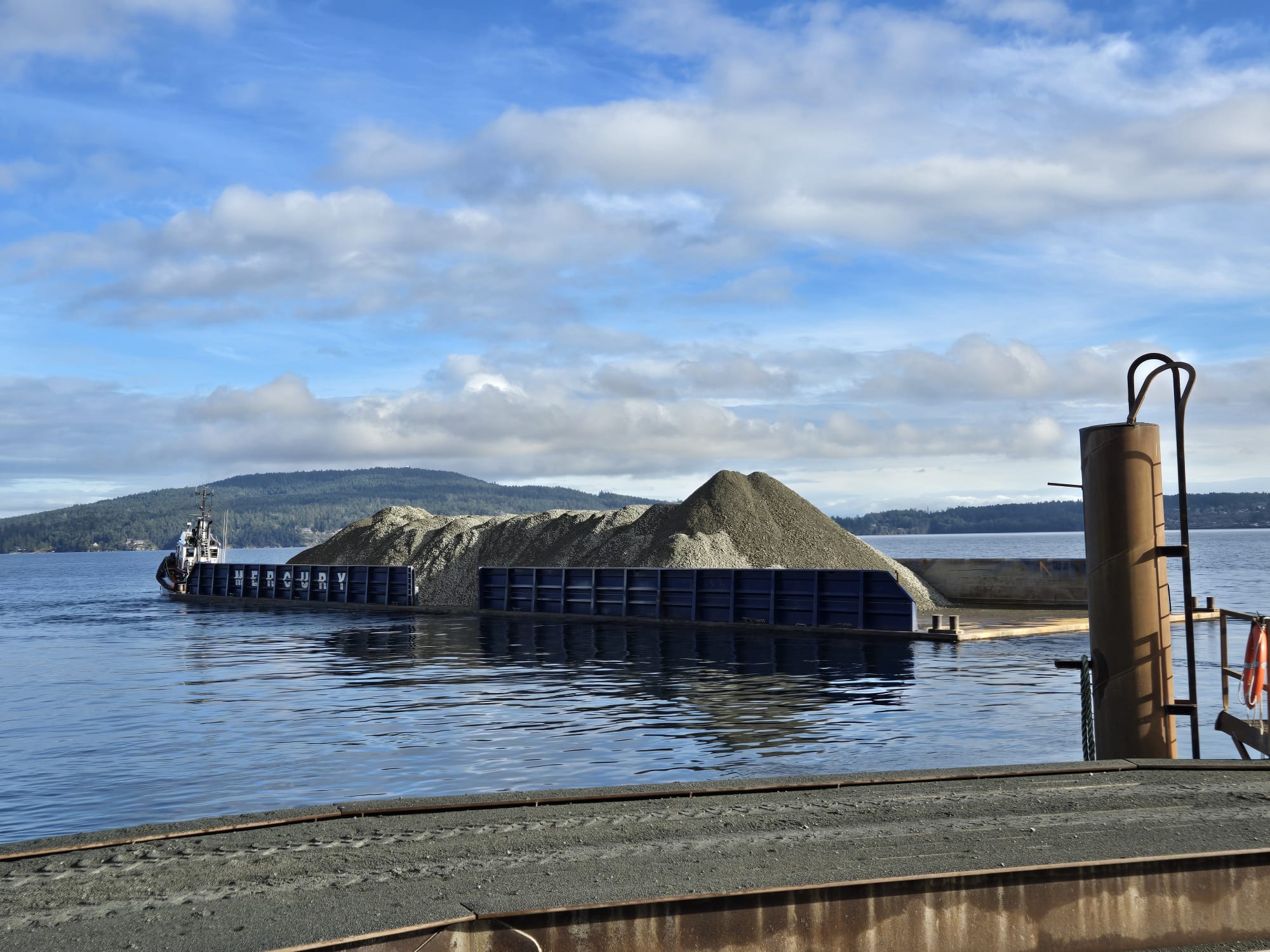
At Bamberton, the company produces base aggregates, ballast, clear stone, and materials used in asphalt and concrete. The quarry is permitted for approximately 480,000 tonnes of annual production, with finished product leaving the site by barge in loads ranging from roughly 4,000 to 8,000 tonnes.
Rethinking the Route from Plant to Barge
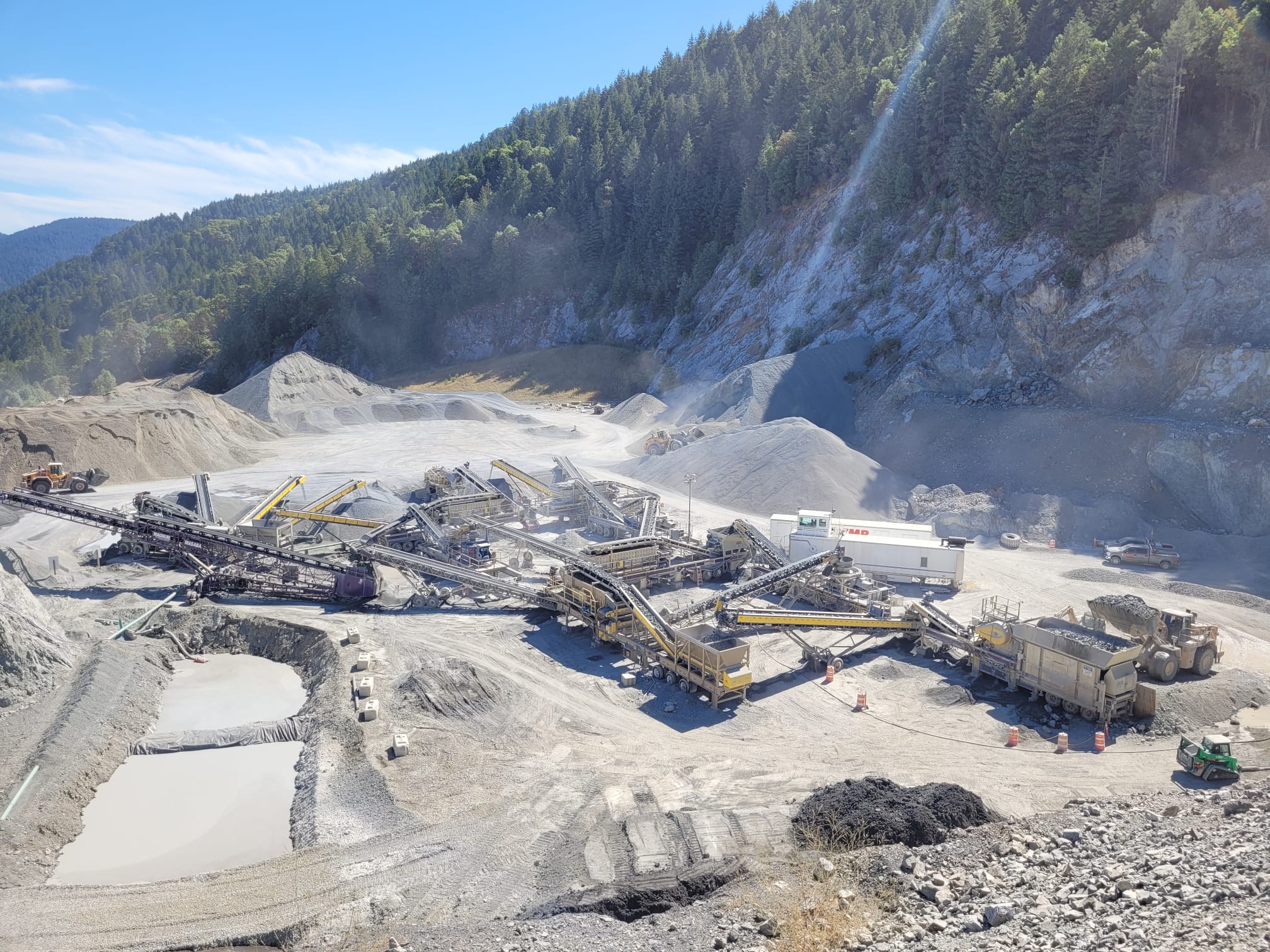
Bamberton follows a conventional drill-and-blast mining process. Material moves from the quarry face to the processing plant, where it is crushed into finished aggregate before being prepared for shipment.
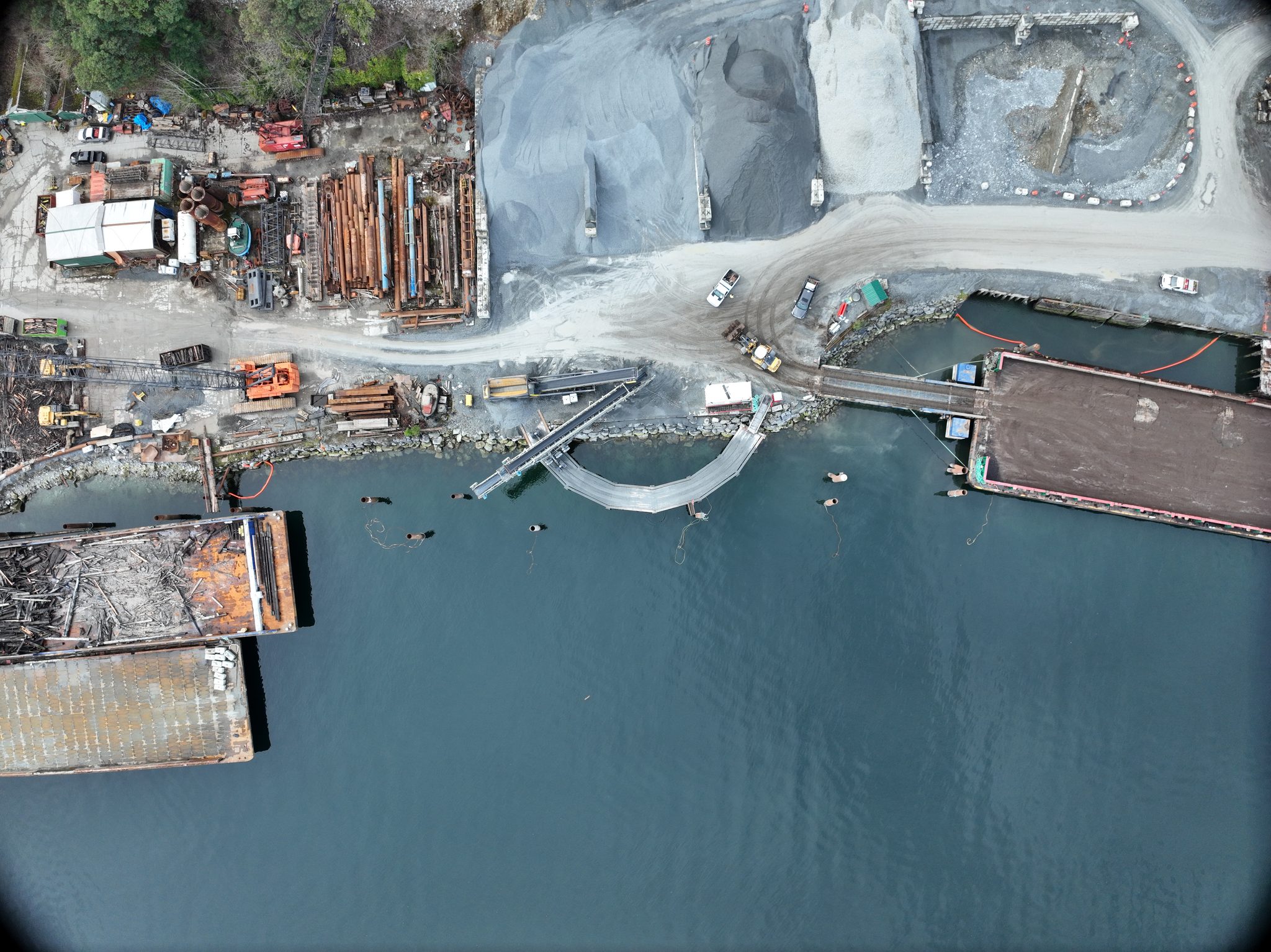
Finished aggregate was stockpiled near the plant before being loaded into one of three haul trucks. The trucks then travelled approximately 700 metres downhill toward the waterfront, where the material was dumped into loading bins and transferred again before reaching the barge.
From the quarry face through to shipping, material could move through as many as seven handling stages. Even after processing, Granite identified between two and four additional touchpoints before the material reached the barge.
The typical haul cycle took six to eight minutes, with longer cycles reaching approximately ten minutes. Three 65-tonne haul trucks were dedicated to the route, repeating the same trip throughout the operating day.
For Granite, the opportunity was to reduce how much handling was required throughout the operation.
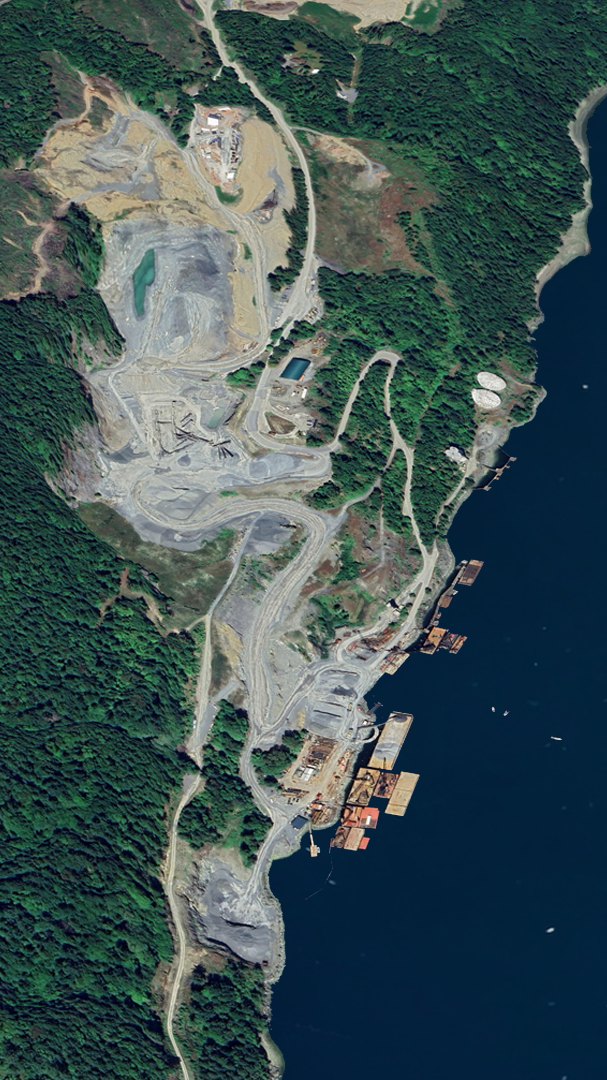
The company began assessing a different way to move finished aggregate between the processing plant and waterfront. The goal was to reduce repeated loading, hauling, dumping and rehandling while also reducing equipment interaction, diesel use, dust and noise along the route.
The direction that emerged was a conveyor-based system connecting the processing plant directly to the barge loadout.
Turning the Concept Into a Project
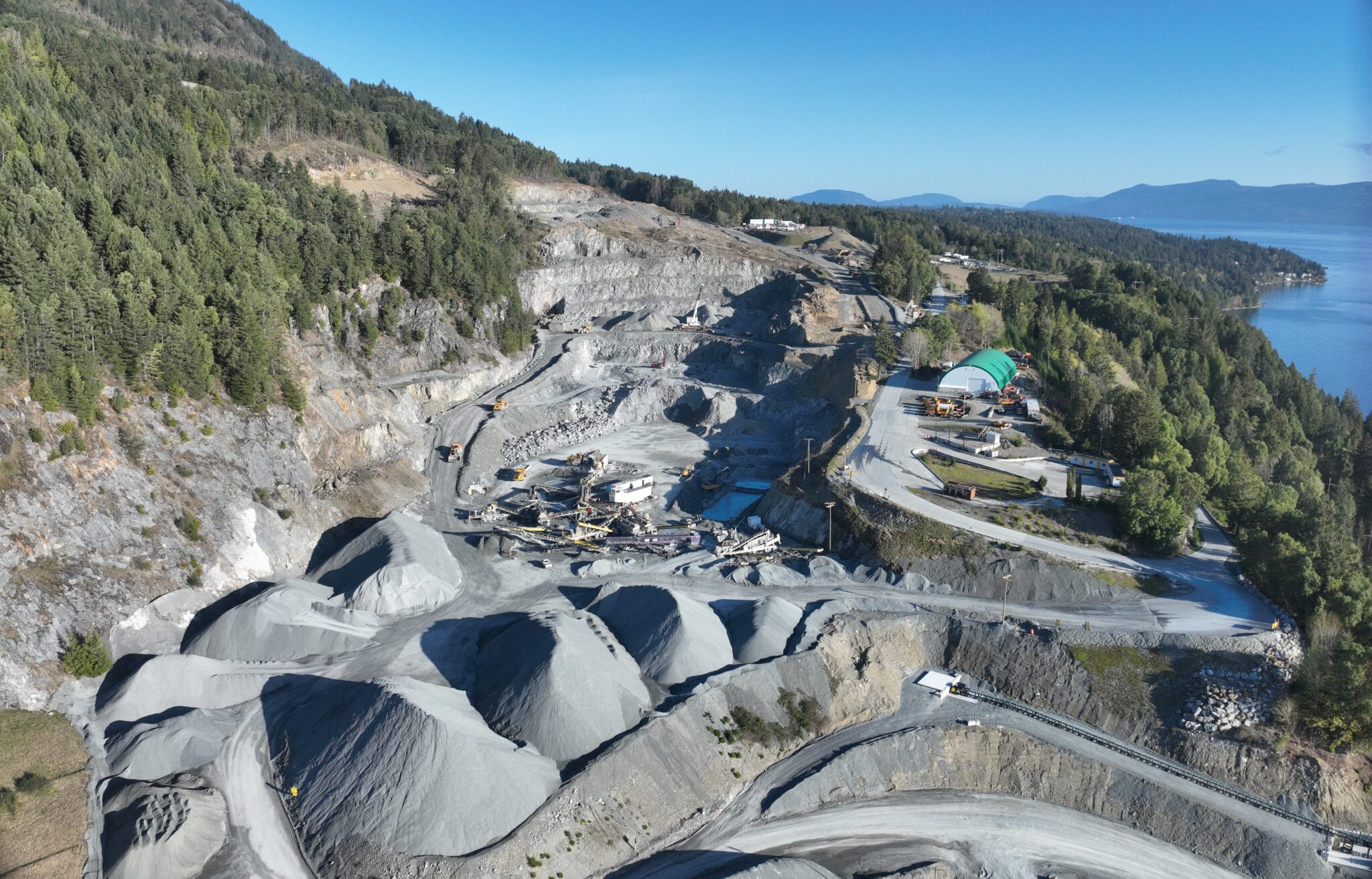
Moving material downhill by conveyor was straightforward in principle, but Bamberton’s existing layout determined how the system could actually be built.
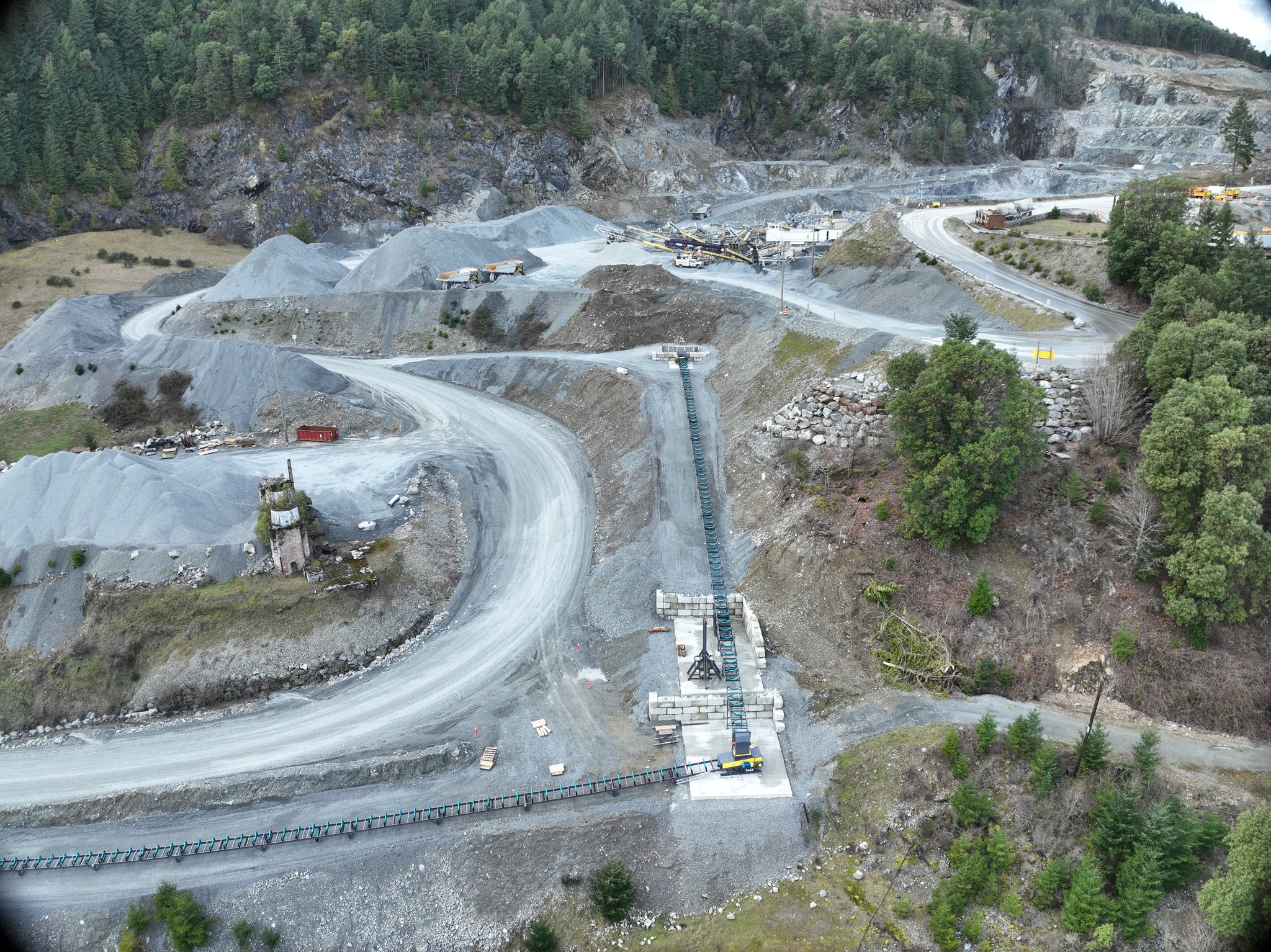
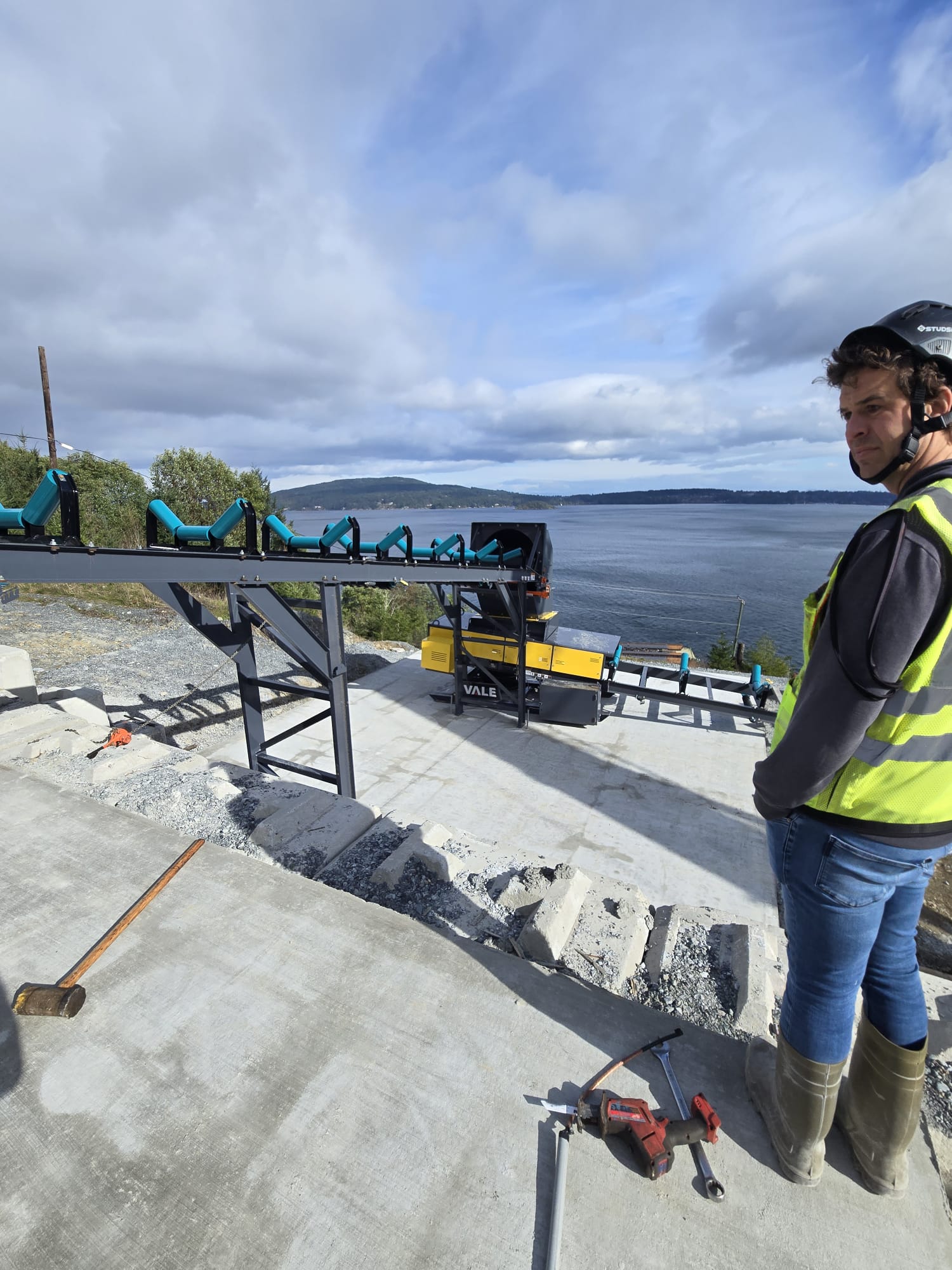
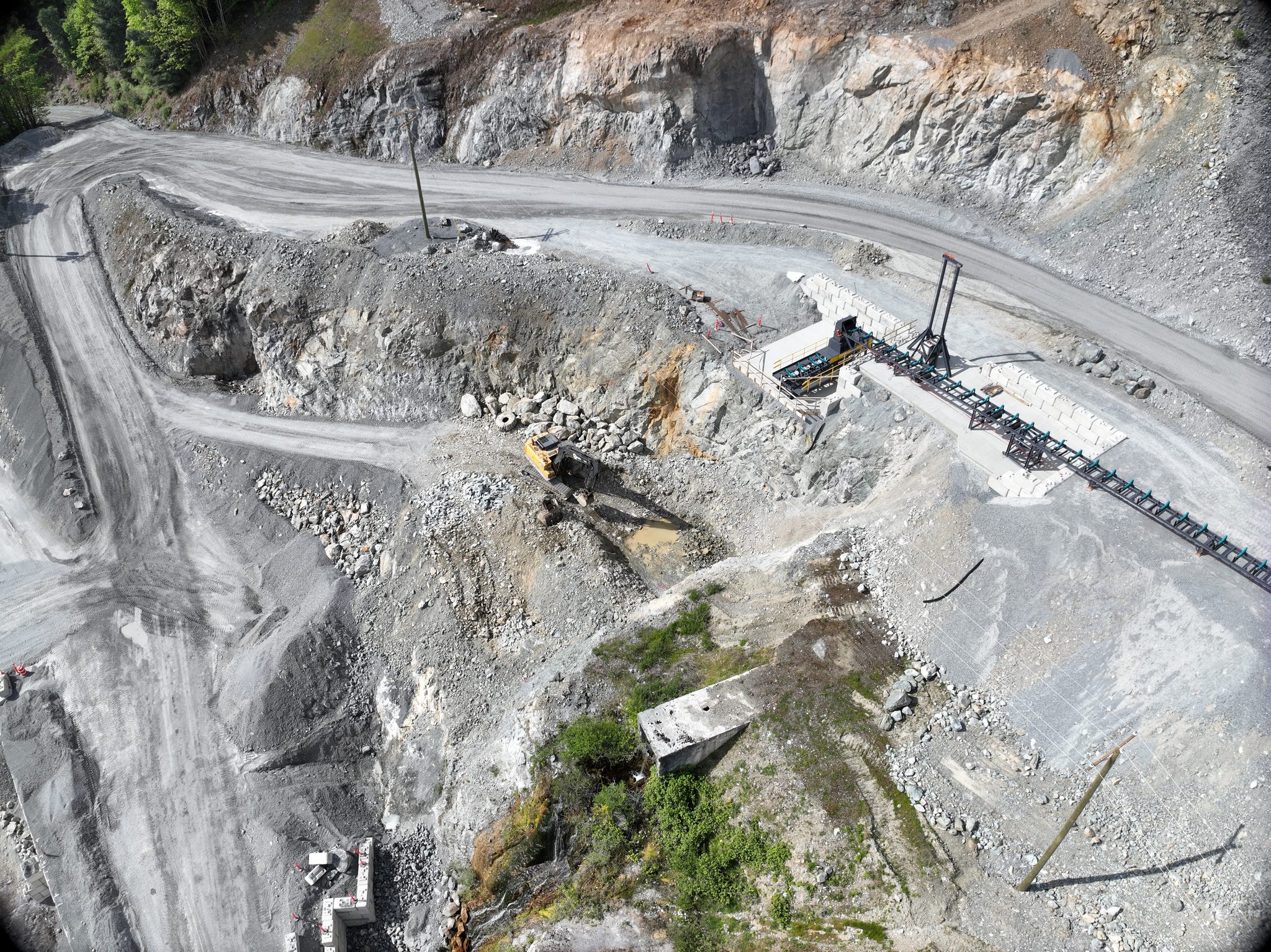
The processing plant sits approximately 68 metres above the barge loading facility. The conveyor route also had to remain within the existing quarry footprint while meeting Granite’s requirements for downhill operation.
After the initial assessment period, Granite approved the project in January 2025 and moved into design and vendor selection.
Multiple vendors were engaged, with Granite reviewing quotations and technical packages before developing a shortlist. Granite looked for local support and accessibility, understanding of the site, an established working relationship, access to engineering and technical information, pricing and delivery timelines.
Frontline Machinery was ultimately selected as the equipment vendor.
Frontline’s experience in aggregate operations, ability to work across multiple equipment manufacturers, dedicated project support and long-term parts, service and engineering capabilities were all part of the fit for the project.
Working in partnership with Vale Industries, Frontline helped ensure the equipment selection and overall material-handling system made sense for the Bamberton operation. The focus was on making sure the complete system worked together from the processing plant through to Granite’s existing barge loadout.
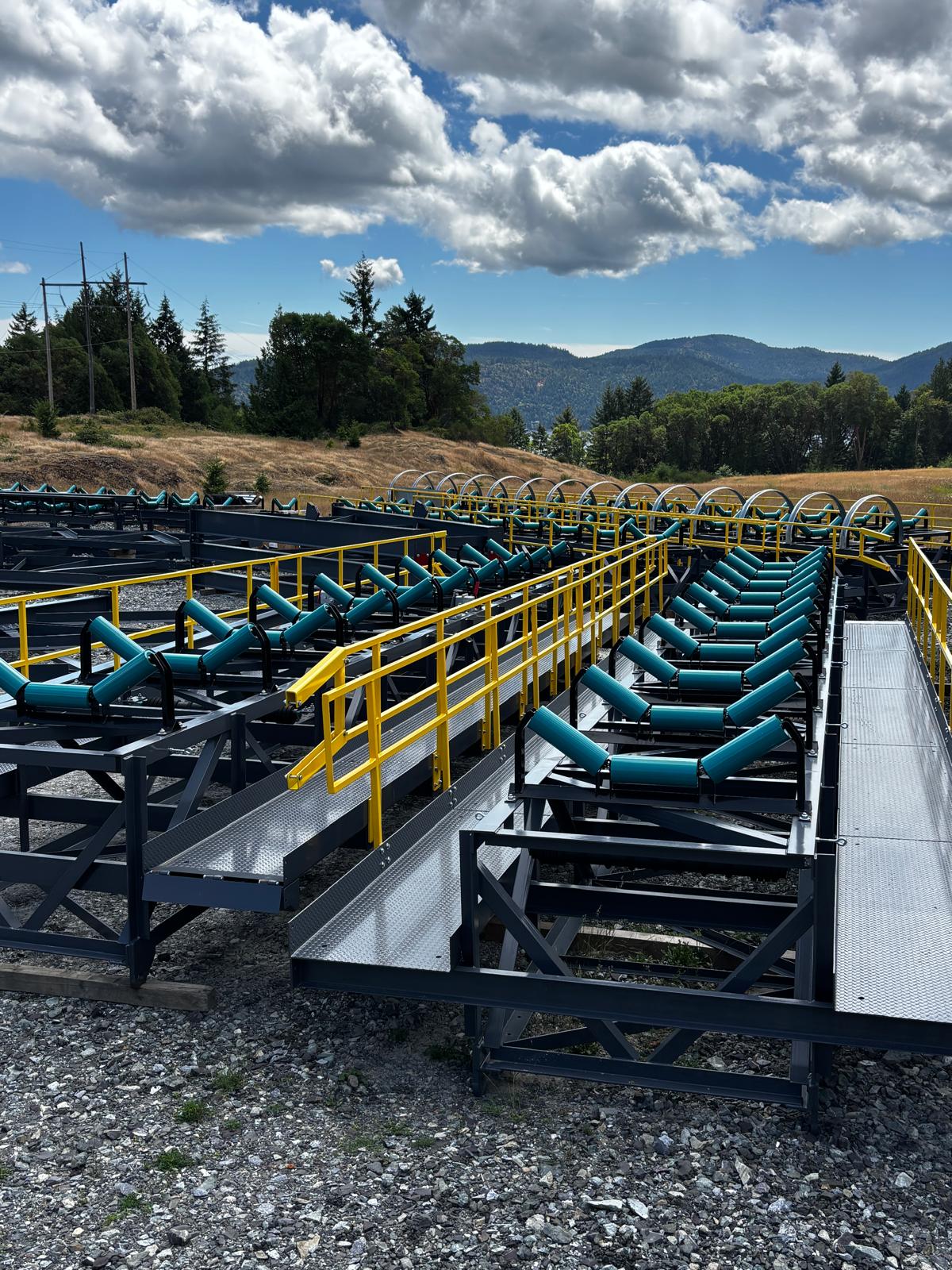
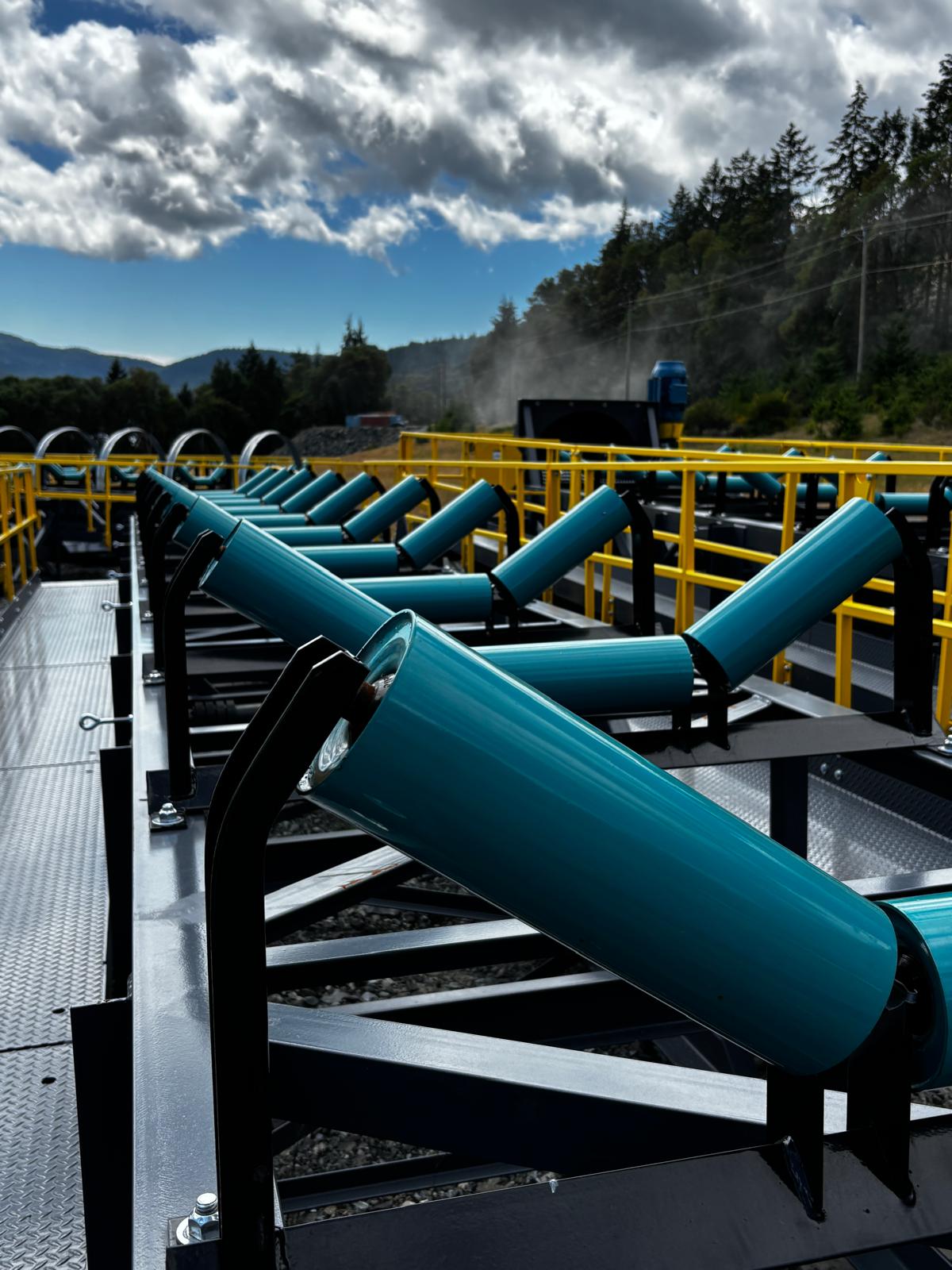
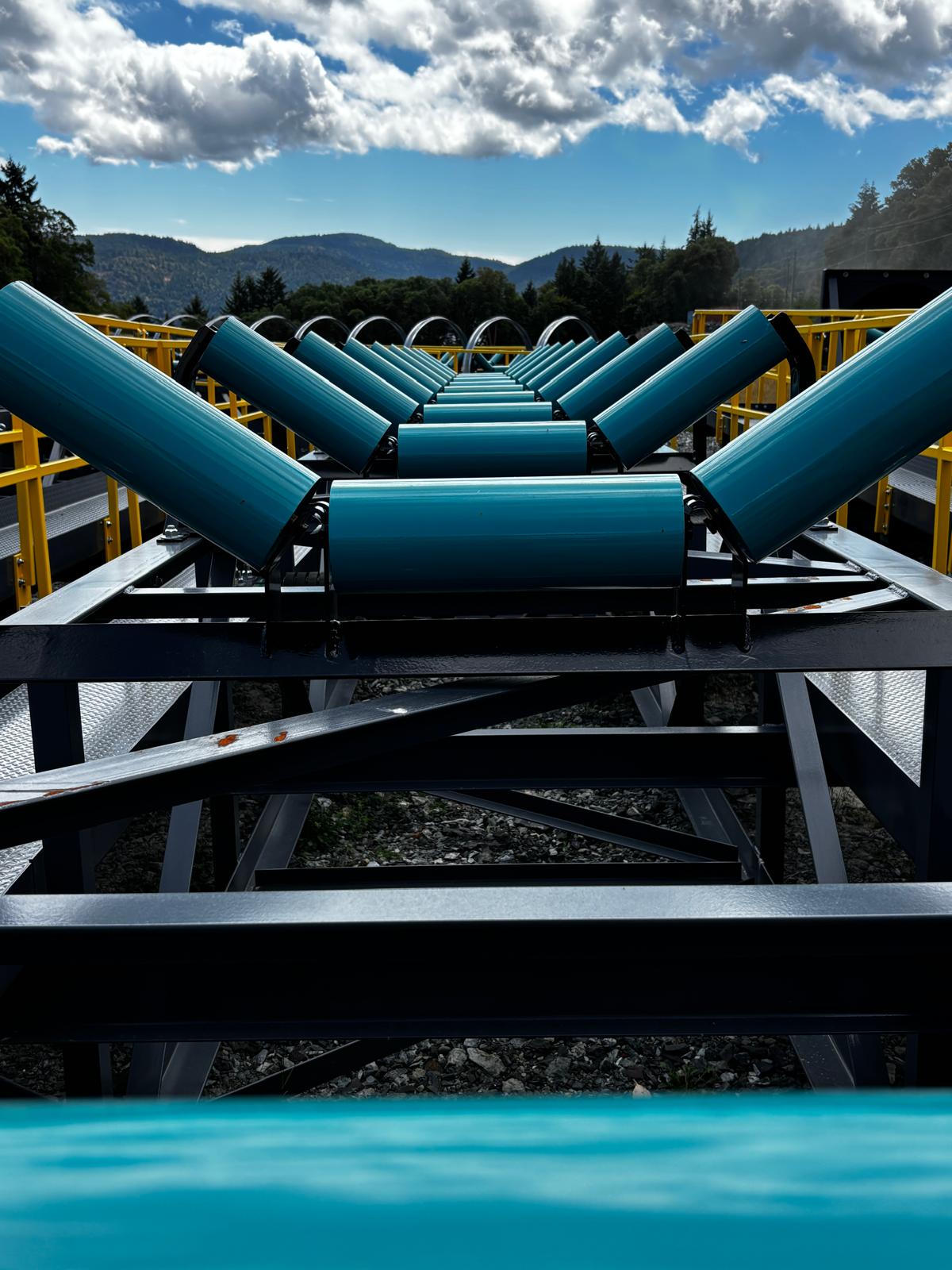
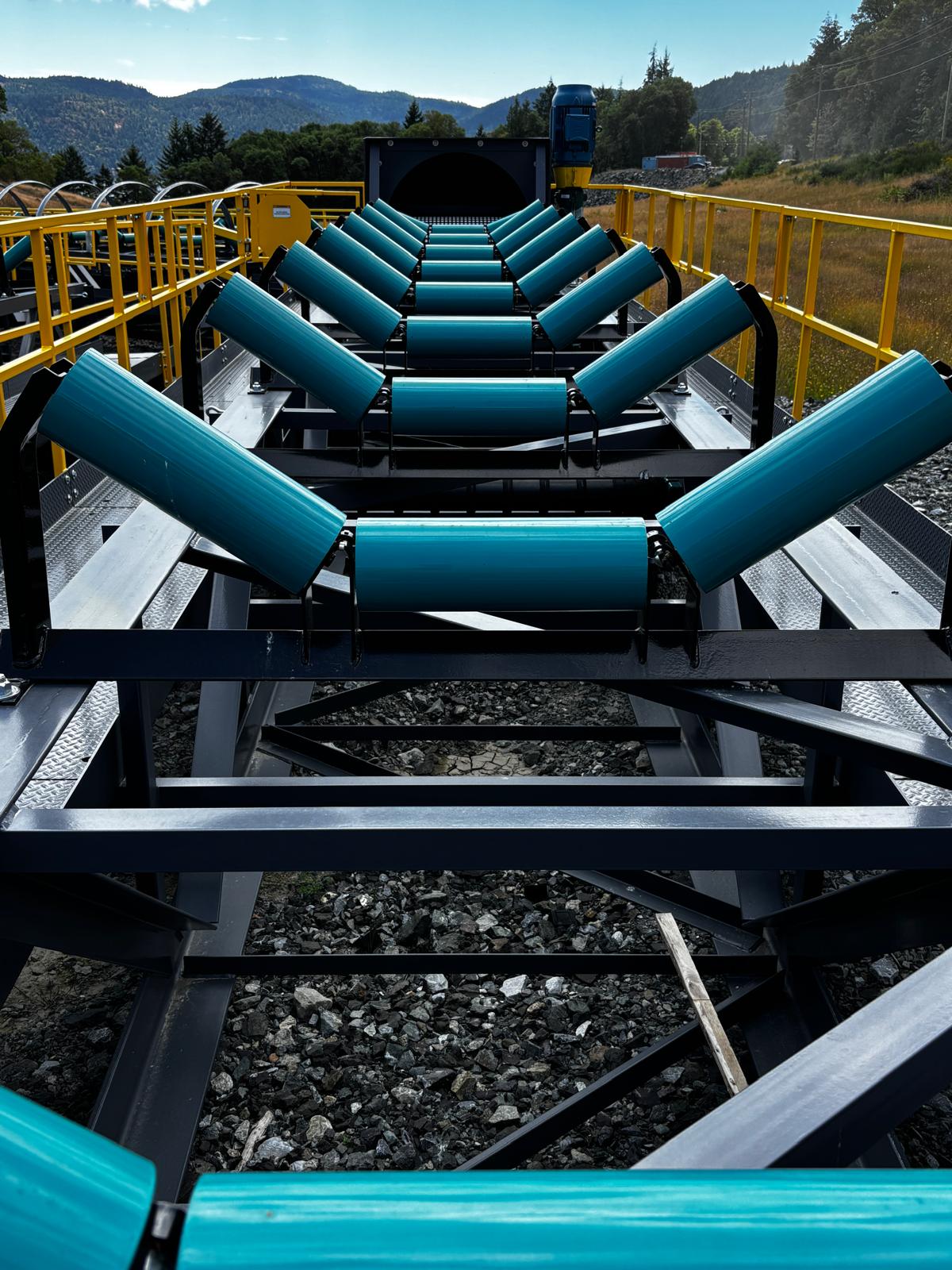
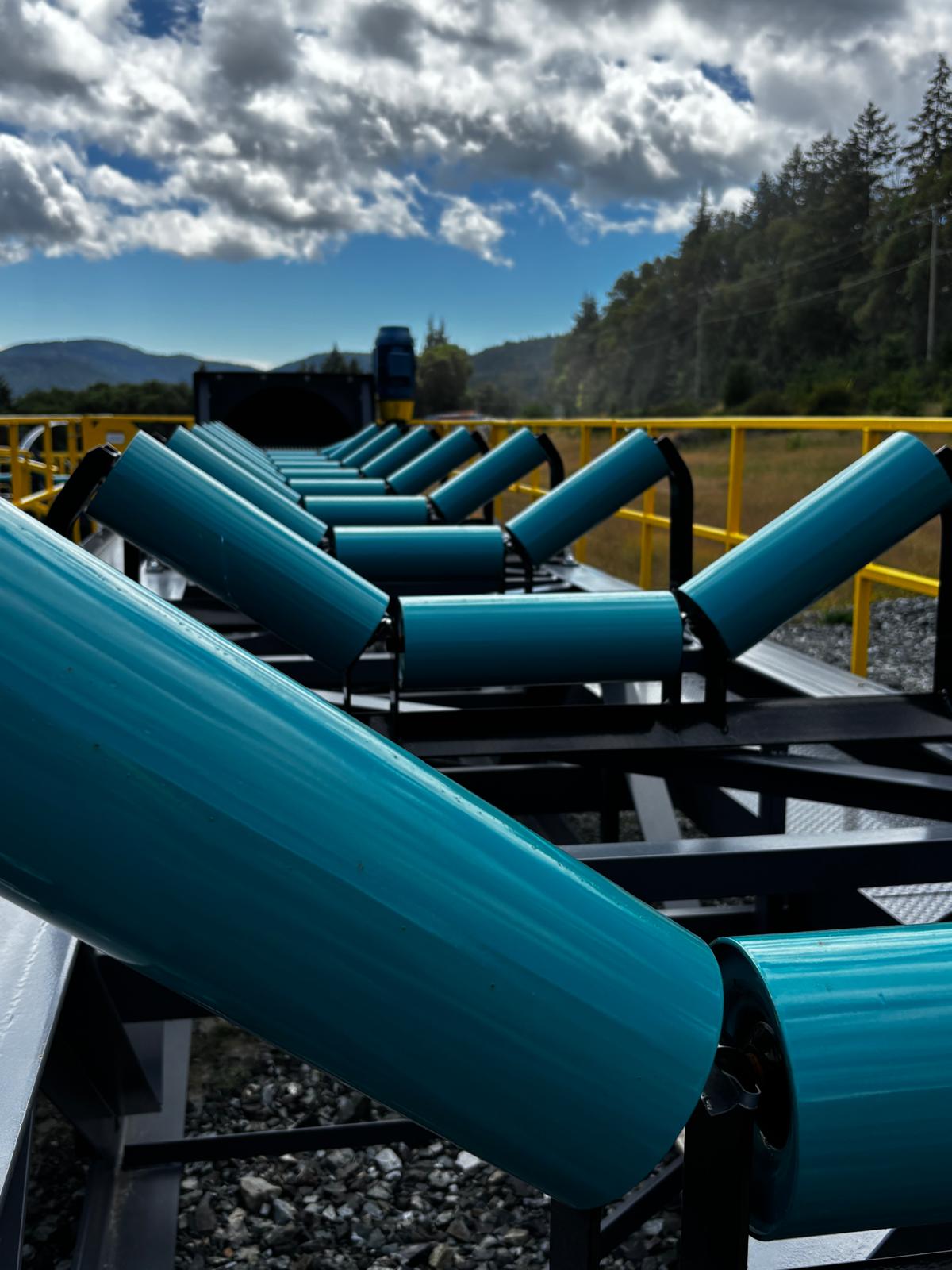
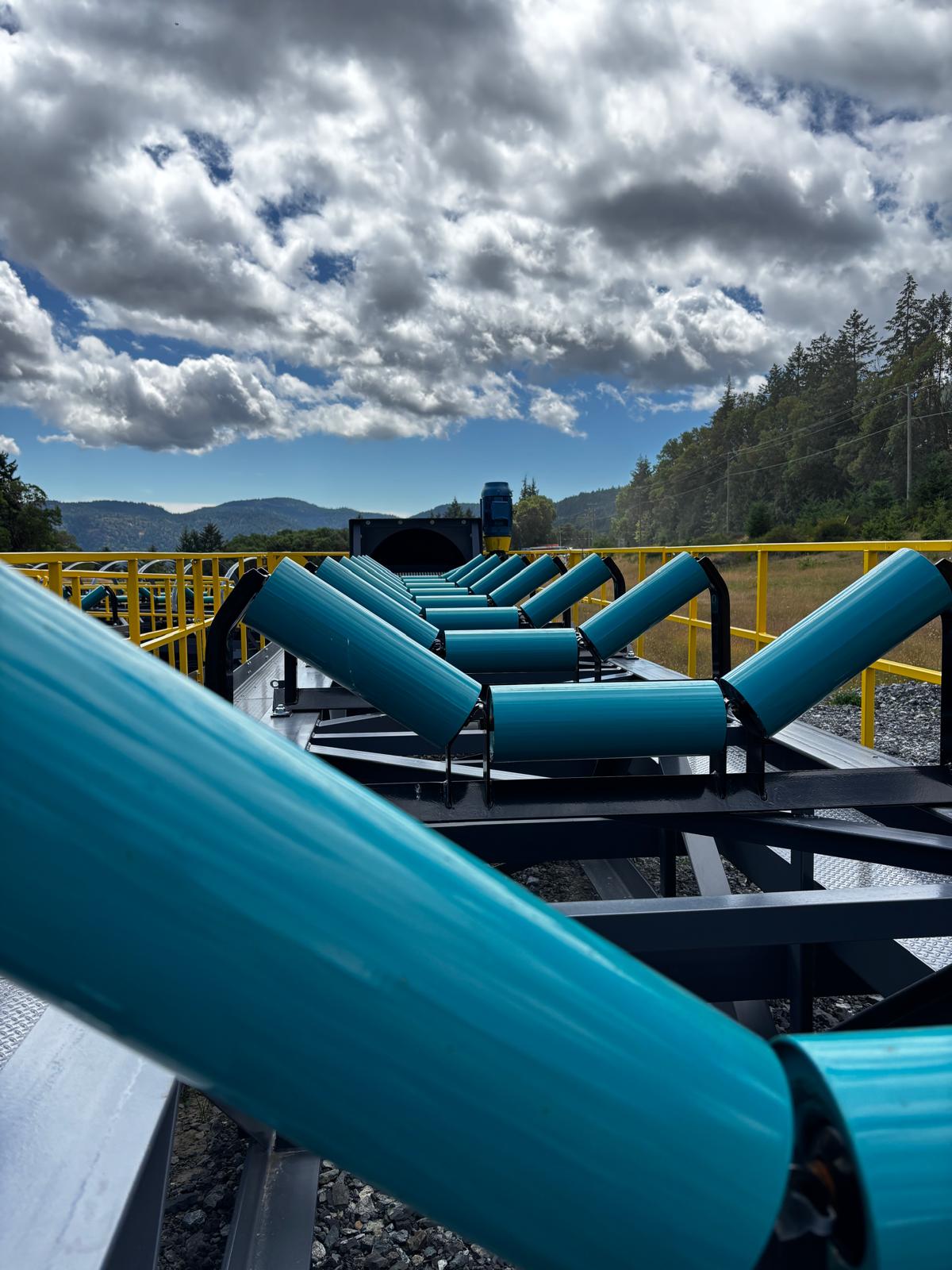
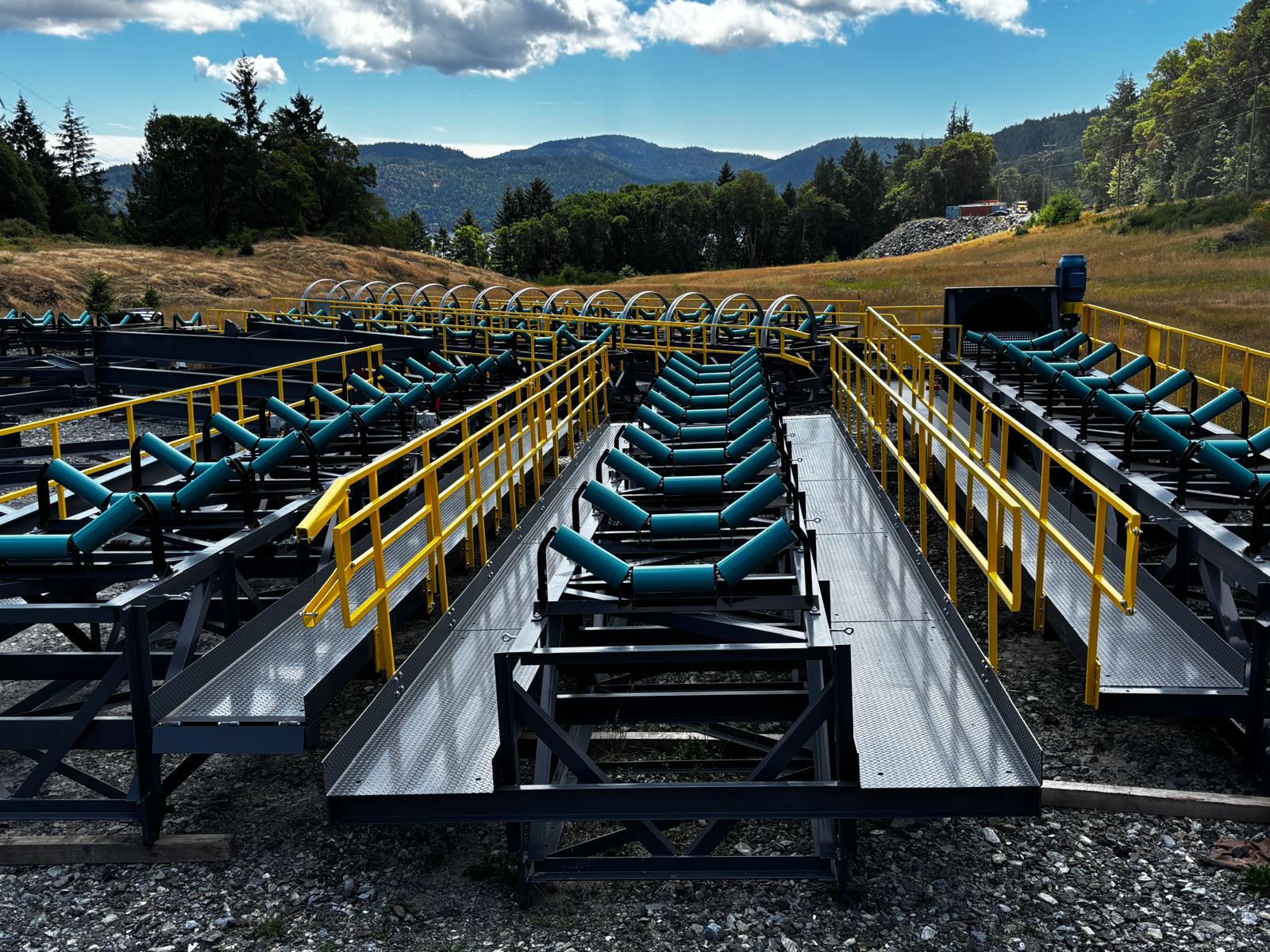
A significant portion of the conveyor components used across the C1 to C5 system were supplied through Frontline’s Kinetic parts line. This included more than 3,000 ft of custom-made conveyor belting, approximately 400 troughing roller assemblies, approximately 200 return roller assemblies, and 24 self-aligning return roller assemblies.
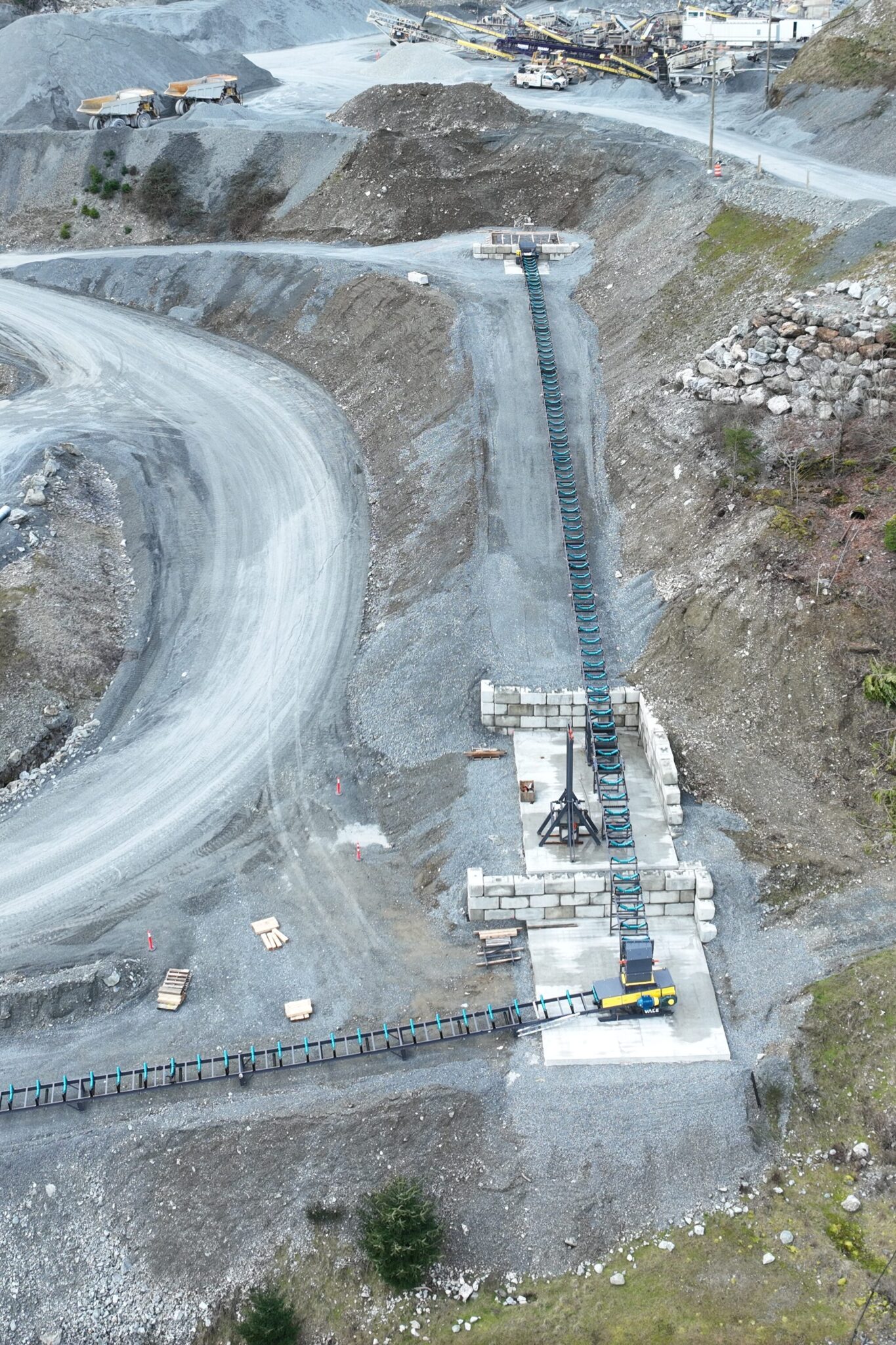
Together with Vale Industries, Frontline supplied the equipment and components required to build out the conveyor route while remaining involved through installation, commissioning and the transition to full operation.
Building a New Material Path
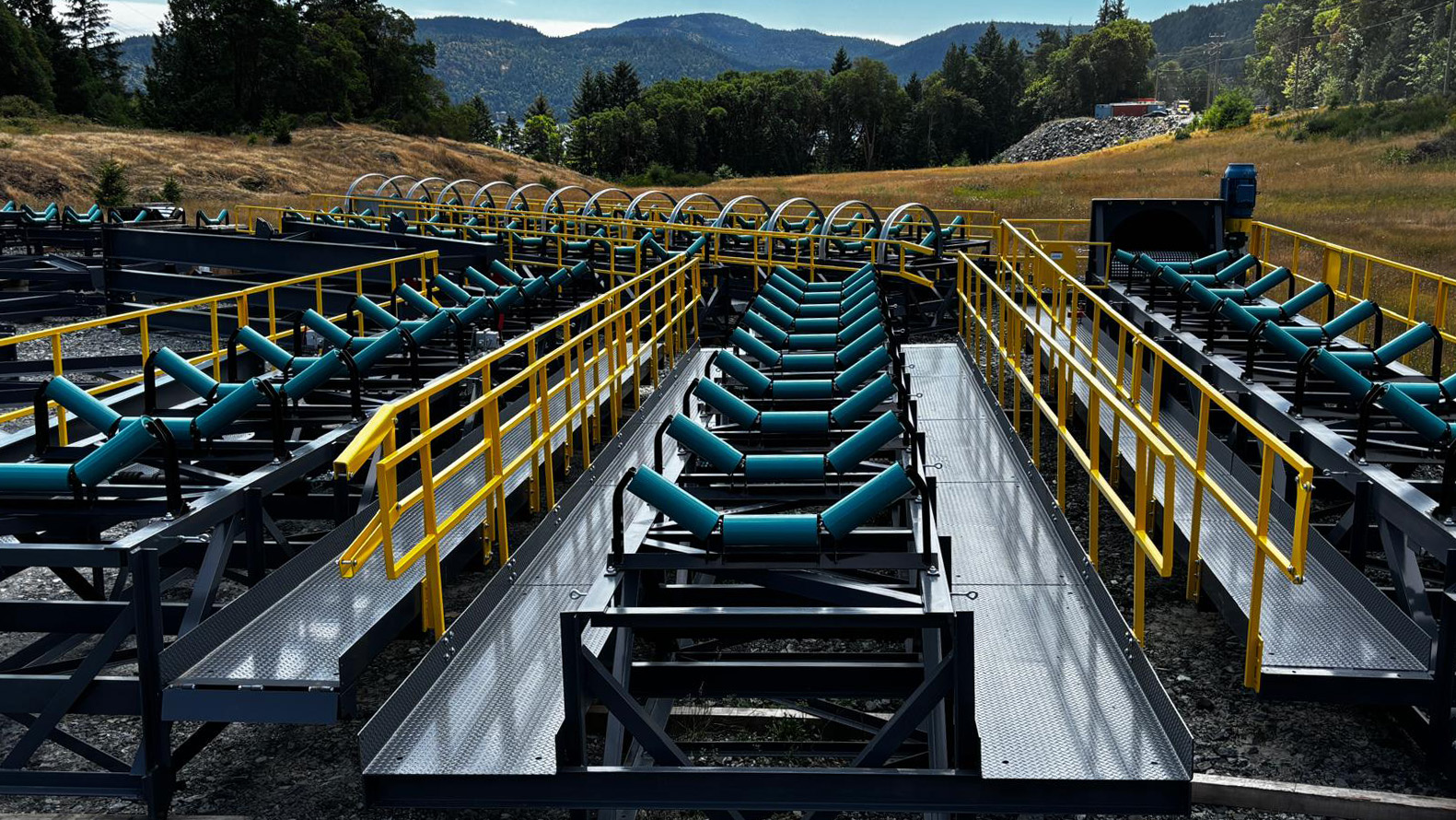
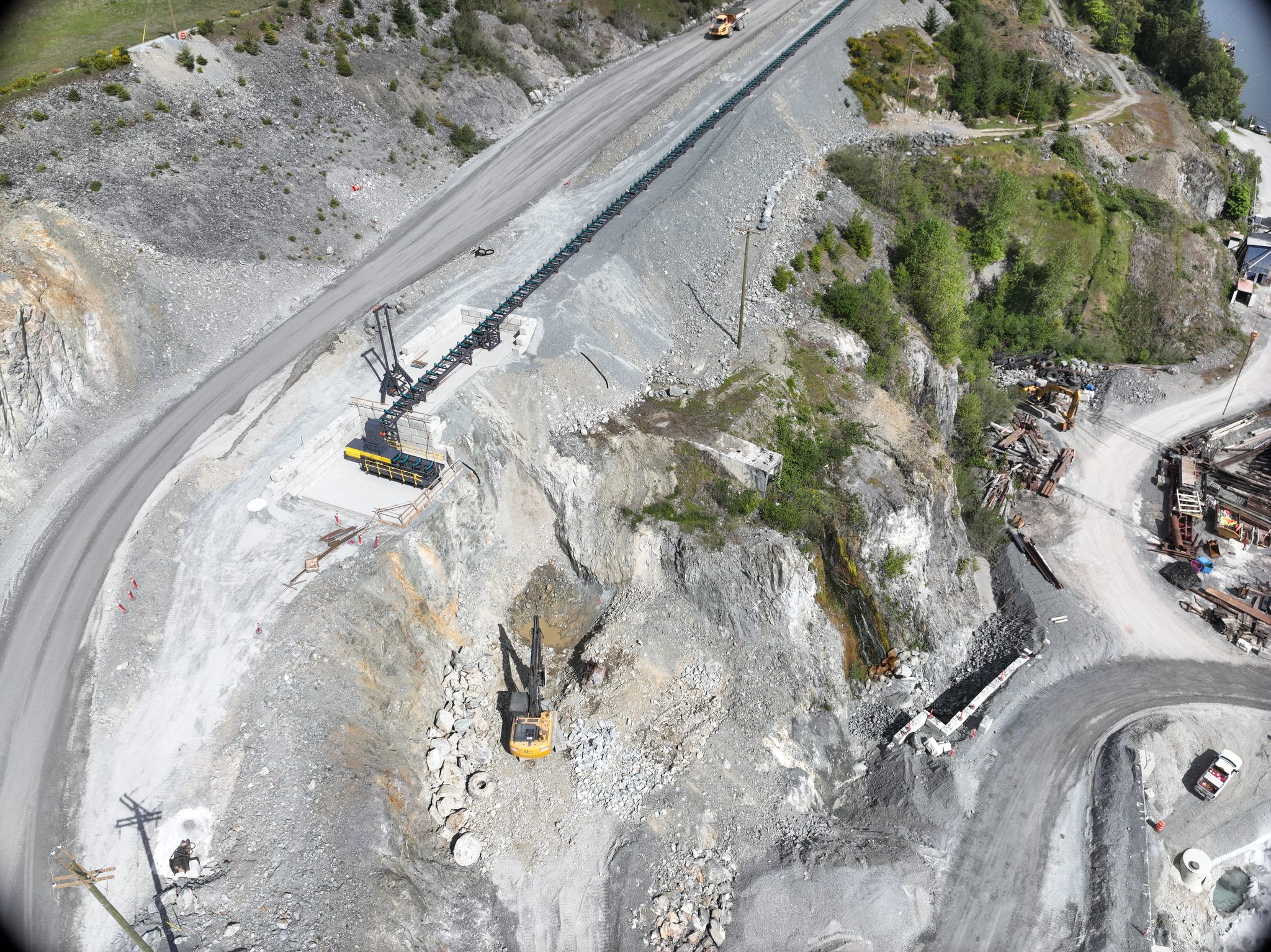
The resulting system uses five conveyors to move processed aggregate from the plant toward the waterfront.
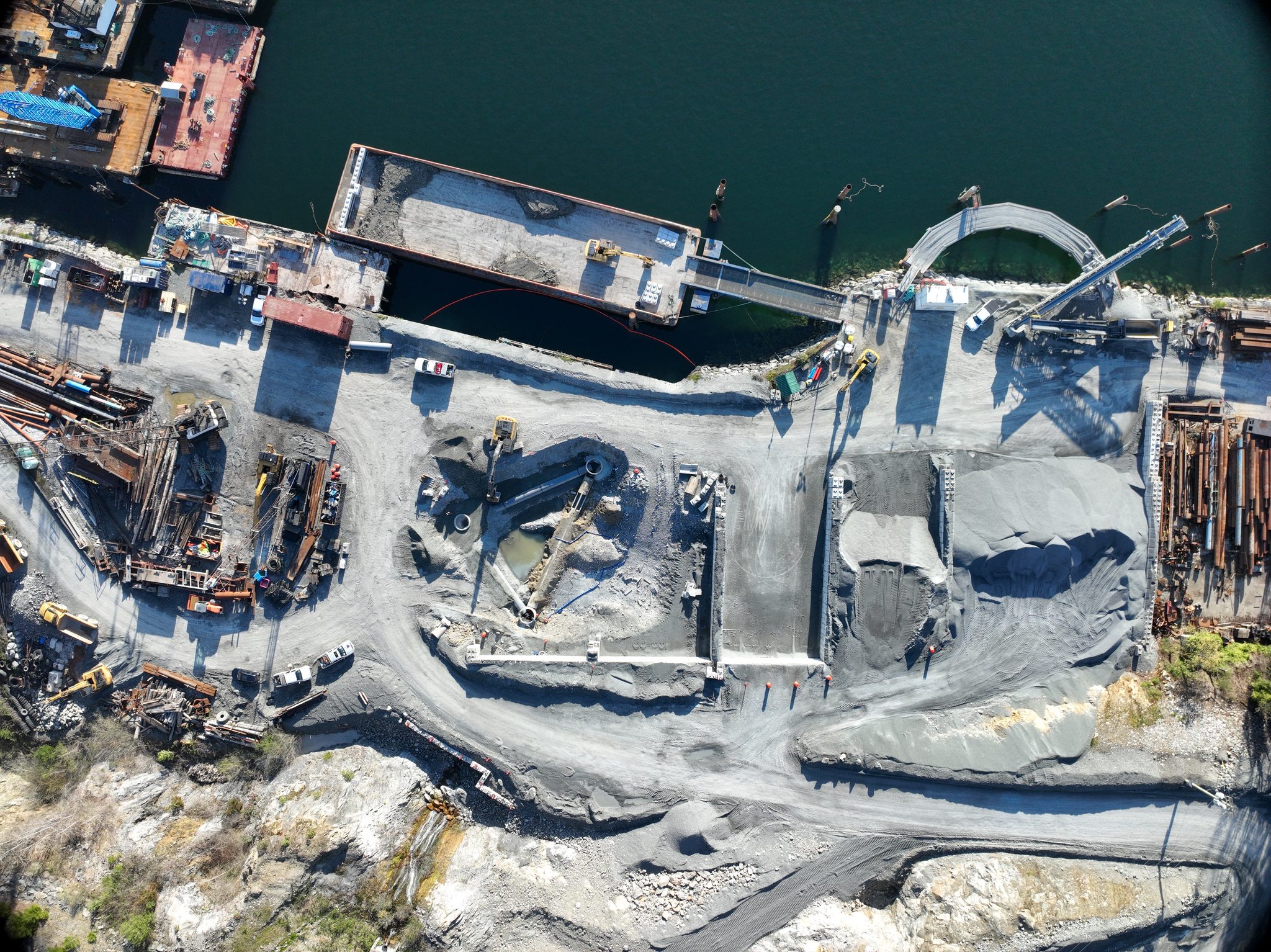
Two 800-tonne silos provide 1,600 tonnes of storage near the barge loadout. From there, material is transferred to Granite’s existing radial stacker for loading onto barges.
The system is designed to operate at approximately 1,000 to 1,200 tonnes per hour, in line with Bamberton’s current loading requirements.
The silos also create a buffer between production and shipping. Material can continue moving toward the waterfront without every stage of production being tied directly to when a barge arrives.
Final design and equipment procurement continued through 2025, with equipment beginning to arrive at Bamberton in November of that year. Assembly followed.
Construction also had to be planned around another requirement: the quarry still needed to operate.
The system is therefore being completed in stages. The upper conveyors are being built and commissioned first, followed by the remaining conveyors, silos and connection to the existing barge loading equipment. The current truck-based process can continue through much of the construction period before the operation transitions to the new system.
The complete system is expected to be operating in 2027.
A More Efficient Path to the Barge
Once commissioned, the basic operation at Bamberton will remain the same. Granite will continue drilling, blasting, processing and shipping aggregate by barge.
What changes is how efficiently finished material moves between the processing plant and the water.
Instead of dedicating trucks and loaders to repeatedly move aggregate down the hill, the conveyor system will provide a continuous route between processing and shipping. That reduces truck and loader demand, eliminates several material touchpoints and allows equipment and labour previously tied to the haul cycle to be used elsewhere in the operation.
In 2024, the interplant haul trucks accumulated more than 2,200 operating hours, with additional loader hours required around the barge loading process. Granite estimates approximately 3,600 workforce hours per year can be reallocated once the new system is operating.
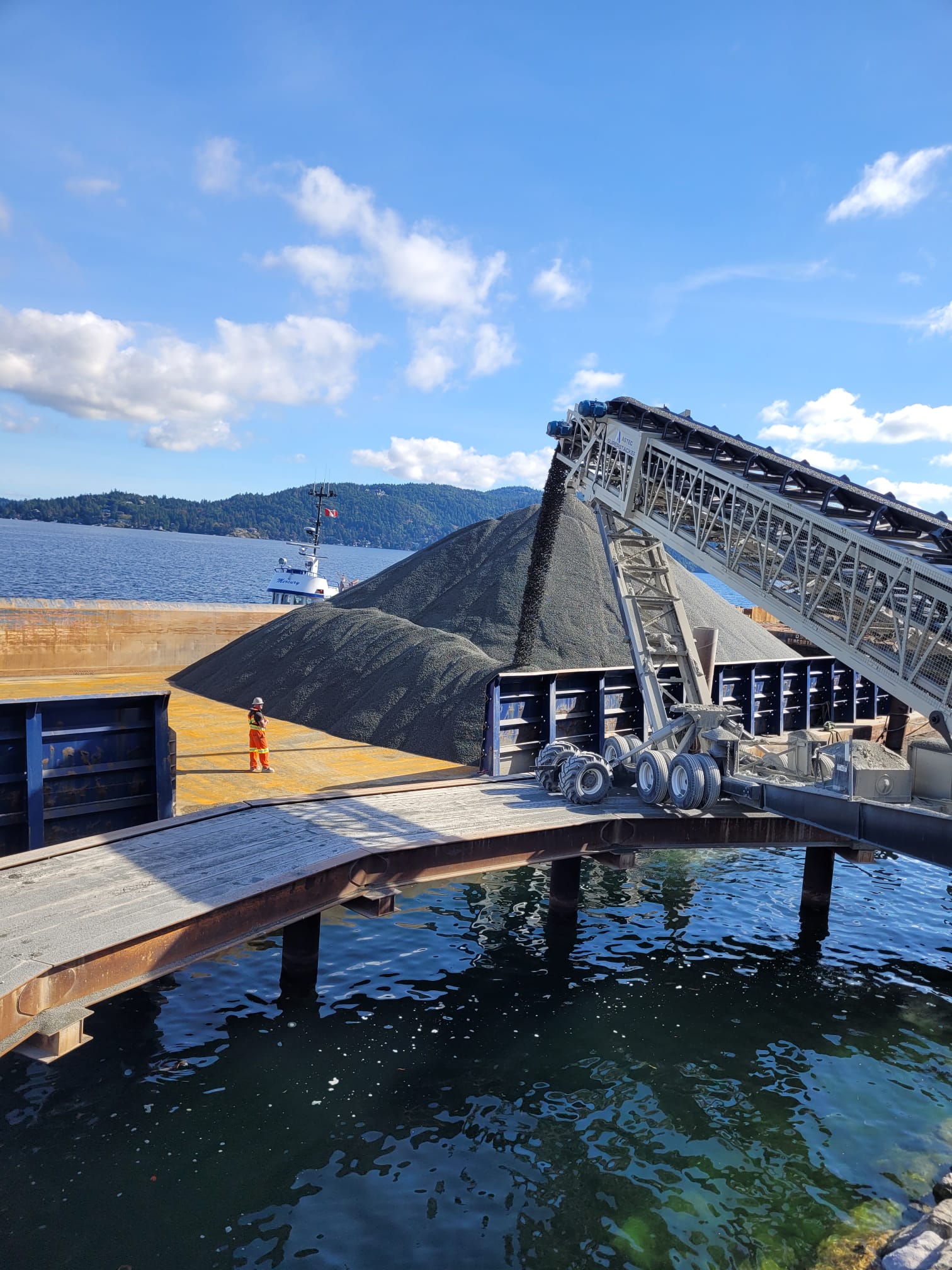
The change also moves much of this material movement from diesel-powered mobile equipment to grid-powered conveying. Granite estimates the project will reduce annual diesel consumption by approximately 350,000 litres and result in projected emissions reductions exceeding 16,000 tonnes of CO2 over ten years.
Beyond the fuel and operating hours, the project simplifies the route itself. Fewer truck movements and transfer points mean less equipment interaction around the waterfront, along with reductions in dust and noise associated with hauling and dumping.
What Comes Next
For now, the project remains in the build and commissioning phase.
As work continues, Frontline Machinery will remain involved in supporting Granite through commissioning and the transition to full operation.
Planning a material-handling change at your operation?
Frontline Machinery works with aggregate producers from first assessment through equipment selection, installation and long-term parts support. Talk to our team about what a conveyor system could change on your site.
Project Gallery